
Donor Segmentation Tips For Sponsorship Programs
Gratona
Donor segmentation is essential for tailoring communication and improving donor retention. By grouping donors based on demographics, giving patterns, engagement levels, and motivations, nonprofits can create personalized messages that resonate with supporters. This approach fosters stronger connections, leading to increased donations and long-term loyalty. Key strategies include:
- Demographics: Use age, location, and income to craft relevant messages.
- Giving Patterns: Analyze donation frequency and amounts to identify trends.
- Engagement Levels: Track interactions like email opens or event attendance.
- Motivations: Understand why donors give to align messaging with their interests.
- Technology: Leverage tools like CRMs and AI for advanced segmentation.
- Regular Updates: Review and refine donor groups to keep communication relevant.
Using these methods not only simplifies fundraising efforts but also ensures resources are allocated effectively, maximizing impact.
Fundraising Expert Reveals BEST Donor Segmentation & Email Campaign Strategies for Nonprofits
1. Group Donors by Demographics
Segmenting donors based on factors like age, income, geographic location, and family status can uncover their varying preferences, allowing you to create personalized messages that resonate more deeply. This strategy not only boosts engagement but also helps nurture stronger, long-term connections with your donors [1].
Most digital donor databases already include essential demographic information, making this approach both practical and easy to implement. Start by leveraging the data you have, and as your understanding of donor behavior evolves, refine your outreach efforts accordingly.
2. Use Giving Patterns to Find Key Donor Groups
Demographics can provide a quick snapshot of your donor base, but digging into giving patterns offers a much deeper understanding. By analyzing when, how often, and how much donors give, you can uncover insights that take your sponsorship program to the next level. This approach goes beyond basic demographics to identify groups with unique behaviors.
Start by looking at donation frequency to identify your most dependable supporters. Some donors contribute consistently, while others donate sporadically - perhaps during specific campaigns or as one-off gifts. For regular donors, focus on providing timely updates and progress reports. For occasional givers, impactful summaries of how their contributions make a difference can strengthen their connection to your cause.
Next, consider donation amounts to add another layer of segmentation. Create donor tiers based on contribution levels, such as $25–$50 for newer supporters, $51–$100 for more committed donors, and $100+ for major contributors. This allows you to tailor recognition efforts and engagement strategies to match each group’s level of commitment. Aligning messaging and recognition with these tiers can make your outreach more meaningful and effective.
Better Donor Retention and Satisfaction
To get a clearer picture of your most valuable donors, calculate Donor Lifetime Value (DLV) by combining donation frequency and amount. This metric helps you predict which supporters are likely to provide long-term value, giving you the insight needed to prioritize and nurture these relationships. By aligning your communication strategies with donor behavior, you can build stronger loyalty and encourage ongoing support.
Easy to Implement with Available Tools
Tracking giving patterns doesn’t have to be complicated. Modern CRM systems automatically capture donation data and generate detailed reports, making it easier to identify trends. These tools can highlight seasonal spikes, track individual donor activity, and flag donors who might be at risk of disengaging. Additionally, Artificial Intelligence tools can analyze complex data to uncover patterns, such as connections between donation timing, amounts, and donor preferences, opening up even more opportunities for segmentation.
Better Fundraising Results
Segmenting donors based on their giving habits can sharpen your fundraising efforts. Recognizing seasonal trends in donor behavior lets you time your outreach for maximum impact, while avoiding the risk of overwhelming donors with poorly timed messages. Tracking average donation amounts also helps you set realistic goals and spot opportunities to encourage higher contributions or reward those who already give generously. By aligning your strategy with donor behavior, you can make your fundraising efforts more targeted and effective.
3. Use Engagement Levels for Targeted Outreach
Tracking donor engagement goes beyond just analyzing demographics and donation patterns - it helps you understand what communication strategies actually work. Not all donors interact with your organization in the same way. Some are highly active, opening every email, attending events, and sharing your content, while others may prefer to simply make a donation and stay in the background.
To get a full picture of each donor’s engagement style, monitor key metrics like email open rates, click-through rates, survey responses, event attendance, social media activity, and website visits. This data helps you identify which donors thrive on frequent updates and which ones prefer occasional but impactful communication.
Using this information, you can create engagement tiers. For instance:
- Highly engaged donors could receive detailed updates, exclusive event invitations, and opportunities to provide feedback on initiatives.
- Moderately engaged donors might appreciate monthly newsletters with inspiring stories and clear metrics on how their contributions make a difference.
- Low-engagement donors may respond better to concise, results-driven communications that skip the details and focus on the outcomes.
This tiered approach ensures that your outreach is tailored, effective, and aligned with each donor's preferences.
Improves Personalization for Donor Communication
Engagement data allows you to move away from generic mass emails and toward messages that feel personal and relevant. For example, if a donor consistently opens your emails but rarely clicks links, focus on crafting subject lines and preview text that deliver key information upfront. On the other hand, if a donor frequently interacts with videos, prioritize visual storytelling over text-heavy updates.
By combining emotional storytelling with data-driven impact, you can create messages that resonate deeply with each donor segment.
Better Donor Retention and Satisfaction
Segmenting donors based on engagement is a powerful way to keep them connected to your cause. When communications align with a donor’s preferred level of interaction, they’re more likely to feel valued and understood - not bombarded or overlooked.
For example, a donor who attends virtual events might appreciate invitations to behind-the-scenes program tours, while someone who prefers email updates could receive exclusive written insights from program leaders. This personalized approach shows donors that you respect their time and preferences, strengthening their emotional connection to your mission.
Easy to Implement with Available Tools
Modern tools make it simple to track and analyze engagement. Email platforms provide insights into open rates, clicks, and overall trends, while website analytics can reveal whether a donor spends time exploring program details or simply completes a quick donation. These tools give you the data you need to tailor your outreach effectively.
Better Fundraising Results
When engagement-based outreach is combined with precise timing, the results can be even more impactful. Highly engaged donors often respond well to peer-to-peer fundraising campaigns or discussions about major gifts. Meanwhile, less engaged donors might prefer straightforward annual appeals with clear, concise impact statements.
Timing also plays a crucial role. For instance, donors who frequently engage with morning emails are more likely to respond if you reach out during their peak activity hours. Similarly, evening email readers are best targeted when they’re most likely to engage. By aligning your messages with both engagement levels and timing, you can maximize your fundraising success.
4. Focus on Donor Motivations and Interests
To effectively segment donors, it’s crucial to understand what drives them to give. Some are inspired by the direct impact their contributions have on children’s lives. Others may be motivated by personal connections, community involvement, or even financial benefits. Pinpointing these motivations allows you to craft messages that resonate deeply with each group.
Start by gathering insights through surveys, donation forms, and conversations at events. Ask questions like, “What inspired you to support our sponsorship program?” or “What part of our work speaks to you the most?” Pay close attention to the words donors use when explaining their reasons for giving - this language can reveal their core motivations and help you shape more meaningful communication.
You can also analyze donor behavior for clues. For example, donors who give consistently during the holidays might be moved by the spirit of giving, while those who increase donations after receiving impact reports are likely motivated by measurable results. Corporate donors often have different priorities, such as enhancing employee engagement or strengthening community partnerships, compared to individual donors who may have more personal reasons.
Improves Personalization for Donor Communication
Understanding what motivates each donor segment allows you to tailor your messaging to their specific interests. For instance, donors focused on direct impact appreciate updates that include photos and stories showing tangible results. On the other hand, efficiency-driven donors might prefer concise reports detailing how their contributions translate into outcomes - like “$50 provides school supplies for one child for six months.”
Personalization involves crafting unique narratives for each group. For faith-based donors, for example, you might highlight how their support aligns with values like compassion and stewardship.
Better Donor Retention and Satisfaction
"62% of nonprofit leaders in 2025 cite donor retention as their top priority, underscoring the importance of building long-term relationships."
- HelpYouSponsor [1]
When donors feel understood, they’re more likely to stick around. Motivation-based segmentation helps ensure you’re sending the right message to the right person. For example, a donor who values transparency and accountability won’t respond well to emotional appeals - they’ll want clear financial reports and program metrics.
This approach also helps you adapt when donor motivations shift. A long-time donor who initially responded to impact stories but now engages more with financial reports might be transitioning from an emotional giver to a more analytical one. Recognizing these changes early allows you to adjust your strategy and maintain their interest.
Acknowledging each donor’s unique contribution also reinforces loyalty. For example, a donor giving $25 monthly because they want to make a personal difference deserves recognition that reflects their motivation - without comparing them to major donors. When donors feel valued for their individual reasons, their connection to your organization strengthens.
Better Fundraising Results
Aligning your fundraising efforts with donor motivations can lead to higher response rates and larger gifts. For example, donors motivated by community impact might respond well to peer-to-peer campaigns or matching gift challenges that emphasize collective action. Meanwhile, donors driven by personal connections may prefer one-on-one conversations about increasing their sponsorship commitment.
Timing is also key. Donors interested in tax benefits are often most responsive to year-end campaigns, while those influenced by seasonal trends might engage more during late summer. Similarly, involvement-driven donors could be ideal for volunteer opportunities, while efficiency-minded donors might prefer fewer, larger contributions.
Easy to Implement with Available Tools
Most donor management systems make it simple to track motivational data. You can create custom tags like “impact-driven,” “faith-motivated,” or “efficiency-focused” to segment your database for targeted campaigns.
Survey tools integrated with your donor database can help you collect this information systematically. For instance, you can send short surveys to new donors asking about their interests, then use their responses to assign them to appropriate segments. Many email marketing platforms also let you create tailored templates for each group, streamlining your communication process.
Start small with a few key motivational categories, and refine your approach as you gather more data. These insights not only improve segmentation but also lay the groundwork for leveraging advanced tools to refine your strategies even further.
5. Use Technology for Advanced Segmentation
Technology takes segmentation to the next level by revealing patterns that might otherwise go unnoticed. Modern tools use advanced data analysis to refine donor groups, going beyond basic demographics or motivations. AI-powered systems, for instance, can automatically sort donors into highly specific groups based on their giving habits, engagement history, and communication preferences. These tools can even detect subtle trends, like donors who often contribute after receiving updates about the impact of their donations.
Customer Relationship Management (CRM) systems play a big role here. They gather data from various touchpoints - like website visits, email interactions, events, and donation records - to uncover engagement trends and behavioral patterns. Machine learning can predict donor behavior, flagging those likely to increase their contributions or those at risk of disengaging. This data-driven approach blends traditional segmentation with cutting-edge precision, helping you connect with donors more effectively.
Improves Personalization for Donor Communication
With the help of technology, you can personalize donor communications in ways that feel meaningful and specific. For example, platforms can create custom impact reports tailored to a donor's interests. Someone who supports education programs might receive updates on student achievements, while a healthcare donor might get reports on medical advancements.
AI tools also help fine-tune content delivery. They analyze what resonates with different donor groups - some might engage more with visual updates, while others prefer detailed reports. These systems can even optimize email subject lines and send times based on past engagement, ensuring your message lands at just the right moment.
Better Donor Retention and Satisfaction
Personalization doesn’t just make donors feel special - it also boosts retention. Advanced analytics can flag early signs of disengagement, giving you the chance to re-engage donors before they lapse. For example, AI-powered Donor Lifetime Value (DLV) analysis helps you focus retention efforts where they’ll have the most impact. High-value donors might get more personalized outreach, while smaller donors still receive consistent communication.
Automation also makes it easier to show appreciation. Technology can trigger personalized thank-you messages, milestone celebrations, and updates about how donations are making a difference. These thoughtful touchpoints help build stronger, long-lasting relationships.
Better Fundraising Results
Predictive modeling is another game-changer for fundraising. By analyzing data, technology can pinpoint the best times and methods to reach specific donors. For example, it can identify which donors are most likely to respond to a particular campaign and when they’re most likely to engage. This targeted approach tends to deliver much better results than broad, one-size-fits-all efforts.
Easy to Implement with Available Tools
The good news? You don’t need to be a tech expert to get started. Most affordable donor management solutions now come with built-in segmentation features that are user-friendly. You can create detailed donor groups using simple dropdown menus and checkboxes.
These platforms often include pre-designed templates for common scenarios, like identifying lapsed donors or major gift prospects. As you learn more about your donor base, you can customize these templates to suit your needs.
Integration is another plus. Many systems connect seamlessly with email marketing tools, social media platforms, and financial reporting software. This means insights from one platform can automatically guide actions in another, streamlining your workflow and maximizing the return on your tech investment - all without requiring extensive technical skills.
6. Review and Update Segments Regularly
Donor segments aren't static - they need consistent attention to remain effective. People's circumstances shift, giving habits evolve, and new preferences emerge. What worked for a donor group six months ago might fall flat today. Regularly revisiting your segmentation ensures your outreach stays in tune with donors' changing behaviors.
A structured review schedule is essential for staying on top of these changes. Many successful sponsorship programs revisit their donor segments quarterly, with more in-depth evaluations annually. This approach helps identify seasonal giving trends, life changes that may affect donation capacity, and shifts in communication preferences. During these reviews, focus on identifying donors who've transitioned between segments, spotting new giving patterns, and assessing whether any segments have become too broad or too narrow to be effective.
Better Donor Retention and Satisfaction
Keeping your donor segments up to date plays a big role in retaining supporters. Outdated segments can lead to communications that feel generic or disconnected from donors' current interests and situations.
Regular updates also help you catch signs of disengagement early. For instance, a previously active donor who hasn’t opened your emails in months might need to move from a "highly engaged" group to a "re-engagement needed" segment. This shift allows you to tailor your approach - like sending more personal outreach or content designed to reignite their passion for child sponsorship.
On the flip side, updated segments can highlight positive changes. Donors who have increased their giving or started engaging more with your content deserve to move into higher-priority groups. This ensures they receive the recognition and communication that matches their growing involvement.
Improves Personalization for Donor Communication
Accurate and up-to-date segmentation makes personalization more impactful. For example, if a donor recently became a grandparent, you can tailor communications to emphasize how child sponsorship aligns with their new role. Or, if someone shows a preference for video content over written updates, their segment should reflect this, ensuring they receive communications that resonate.
Regular reviews also help adjust messaging for life stages. Young professionals might prefer quick, mobile-friendly updates about their sponsored child, while retirees may enjoy detailed newsletters with photos and stories. These preferences can shift over time, and frequent reviews help you catch those changes before your communications feel out of touch.
Better Fundraising Results
Updated segments directly improve fundraising outcomes by ensuring your appeals reach the right audience with the right message at the right time. For instance, refreshed data might reveal that certain donor groups now respond better at specific times of the year due to career changes or family dynamics. This insight allows you to time your campaigns more effectively, increasing the chances of a positive response.
Easy to Implement with Available Tools
Modern donor management systems make it simple to keep your segments current. Most platforms offer reporting features that can automatically flag donors whose behavior suggests they should move between segments. For example, you can track changes in donation amounts, engagement with your communications, or demographic updates.
To streamline quarterly reviews, create a checklist. Include items like "donors who haven’t given in 90 days", "donors with significantly increased engagement", and "new donors ready to transition from orientation to regular segments." These checklists ensure no one falls through the cracks and help integrate segment updates into your overall donor management strategy seamlessly.
7. Simplify Your Work with HelpYouSponsor
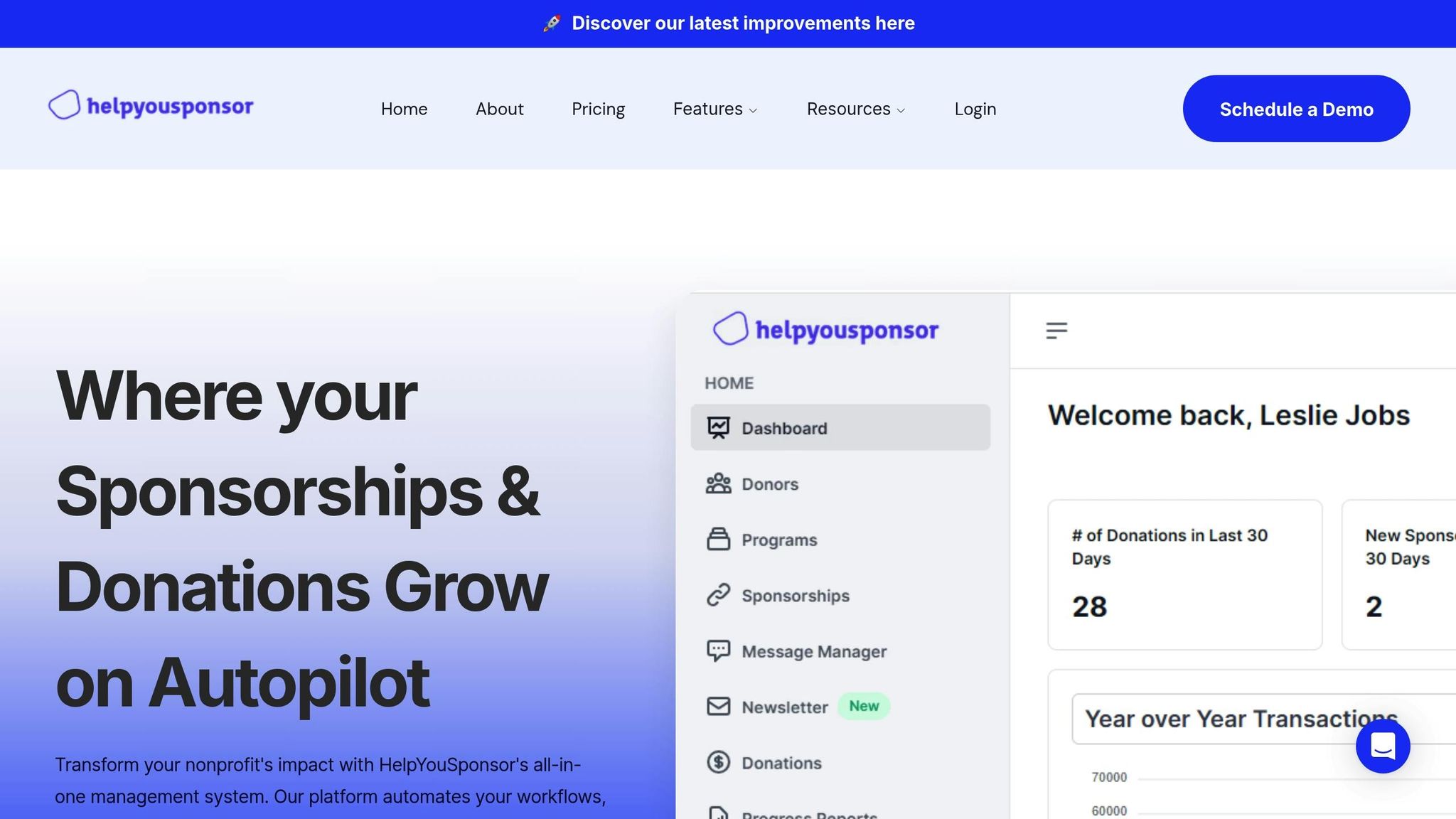
Juggling donor segmentation across multiple systems can feel like an uphill battle. HelpYouSponsor takes the hassle out of this process by bringing everything together in one place. Its powerful donor management system tracks giving habits, organizes engagement data, and simplifies segmentation. This makes it easier for even smaller nonprofit teams to create meaningful connections with their donors, leading to more personalized outreach and better retention.
Easy to Use with Built-In Tools
HelpYouSponsor's "Save Custom Views in the Donations" feature is a game-changer for organizing and segmenting donors. With just a click, you can create custom views and access automation insights to identify donor trends. Whether you're targeting monthly contributors, supporters from specific areas, or those who engage with your emails, these saved views make segmentation effortless.
The platform's intuitive interface walks you through building segments based on factors like demographics, donation history, and engagement levels. Start with simple categories and expand to more detailed criteria as your needs evolve. These tools make it easy to craft highly personalized donor communications without a steep learning curve.
Enhancing Personalization for Donor Outreach
Personalized messaging is key to stronger donor relationships, and HelpYouSponsor makes it seamless. Its segmentation tools allow you to tailor communications to specific groups, all within the same platform. No need to bounce between systems.
For example, if some donors prefer video updates about their sponsored children, you can tag this preference and ensure they receive the right content. Meanwhile, others who value detailed written reports can get tailored updates that match their interests. It’s all about delivering the right message to the right person.
HelpYouSponsor also includes donor lifetime value analysis to help you figure out which strategies work best for different segments. Instead of guessing what resonates, you’ll use real data to guide your decisions, ensuring your outreach hits the mark.
Boosting Donor Retention and Satisfaction
Personalization doesn’t just improve communication - it also strengthens donor loyalty. With 62% of nonprofit leaders in 2025 identifying donor retention as a top priority [1], HelpYouSponsor's tools are designed to tackle this challenge head-on. By tracking each donor's journey, you can build stronger, longer-lasting connections.
The platform flags important milestones, like when a donor increases their monthly sponsorship or engages more with your updates. These insights let you move them into higher-engagement segments and recognize their contributions, deepening their bond with your organization.
On the flip side, it also helps you spot donors who might be losing interest. By monitoring engagement and giving patterns, you can identify early warning signs and shift these donors into re-engagement campaigns, giving you a chance to reignite their enthusiasm before they lapse.
Driving Better Fundraising Outcomes
HelpYouSponsor doesn’t just improve relationships - it also boosts fundraising results. Its targeted fundraising tools ensure that your appeals reach the right donors at the right time. Whether you’re seeking major gifts for a new project or rallying monthly sponsors for an emergency campaign, the platform helps you fine-tune your approach.
Detailed reports show which donor segments respond best to specific campaigns. For instance, you might find younger donors prefer mobile-friendly giving pages, while older supporters lean toward traditional mail. Armed with this knowledge, you can adjust your strategy to meet each group’s preferences.
The platform’s payment gateway integration makes giving easy, no matter how donors prefer to contribute. From recurring bank transfers to mobile payments, the system supports multiple options while tracking responses to help refine your future campaigns.
Comparison Table
Deciding on the best segmentation approach for your sponsorship program can feel like a daunting task. Each method comes with its own set of advantages and drawbacks. Understanding these distinctions is crucial to picking the approach that aligns with your organization's goals and available resources.
| Segmentation Type | Pros | Cons | Best For |
|---|---|---|---|
| Demographic | Easy to gather and interpret; Offers clear, measurable categories; Budget-friendly to implement; Effective for basic personalization | Limited insight into donor motivations; Overlooks nuanced preferences; Risk of stereotyping; Less effective for long-term donor retention | New nonprofits with limited data; Organizations with basic CRM tools; Programs targeting specific age groups or regions |
| Behavioral | Based on actual donor actions; Predicts future giving patterns; Excellent for retention efforts; Produces measurable results | Requires advanced data tracking; More complex to analyze; May overlook deeper motivations; Needs continuous updates | Established programs with donation history; Organizations prioritizing donor retention; Programs with strong data collection systems |
| Psychographic | Provides deep insight into donor motivations; Enables highly personalized messaging; Builds strong emotional connections; Ideal for major gift campaigns | Expensive and time-consuming to collect; Requires specialized surveys or research; Challenging to scale; Preferences may evolve over time | Major donor programs; Organizations with research budgets; Programs emphasizing long-term relationships |
Demographic segmentation is a straightforward way to personalize outreach for newer programs but doesn’t delve into what truly drives donor behavior. Behavioral segmentation works well for established programs, leveraging donor actions to predict future contributions, though it requires advanced data systems. Psychographic segmentation uncovers donor motivations, offering a highly personalized approach that’s perfect for major donor relationships, albeit with higher costs and complexity.
For the best results, many organizations combine these methods. Start with demographic data for a foundational understanding, incorporate behavioral insights as you gather more information, and use psychographic data to deepen relationships with your most valuable donors. This layered approach provides a well-rounded view of your donor base, improving both engagement and fundraising outcomes.
Ultimately, the complexity of your segmentation should match your organization’s resources and goals. Smaller nonprofits might stick to demographic and basic behavioral segmentation, while larger organizations can explore psychographic research for major donor programs. By blending these methods, you can fine-tune your outreach and make the most of your program’s potential.
Conclusion
Donor segmentation has the power to reshape how your program connects with its supporters. By categorizing donors based on factors like demographics, giving habits, engagement levels, and personal motivations, you open the door to building stronger, more meaningful relationships - ones that go far beyond a single contribution.
This article broke down segmentation into three key strategies: demographic segmentation as the starting point, behavioral insights to uncover motivations, and psychographic data to tap into emotional drivers. Together, these approaches provide a well-rounded understanding of your donor base.
Technology is a game-changer here. Advanced tools can handle the heavy lifting of data collection and analysis, freeing up your team to focus on what truly matters: nurturing relationships with donors. Regularly updating and reviewing your segments ensures they stay relevant as donor preferences shift, creating a solid foundation for long-term retention.
"62% of nonprofit leaders in 2025 cite donor retention as their top priority, underscoring the importance of building long-term relationships." [1]
Retaining donors over the long haul not only ensures steady support for children but also allows your organization to plan more effectively for the future.
By combining personalized messaging, storytelling backed by data, and targeted outreach, you can create a strategy that drives sustainable growth through data-driven fundraising. Nonprofits that embrace these methods often see happier donors, stronger retention rates, and an increase in the lifetime value of their supporters.
Start small, using segmentation techniques that match your current resources. Even simple demographic groupings can make your communication more impactful. As you collect more data, layer in behavioral and psychographic insights to refine your approach.
Ultimately, the success of your program hinges on understanding what motivates your donors and responding to their needs. Thoughtful segmentation not only deepens those connections but also ensures ongoing, meaningful support for the children you serve.
FAQs
How can tools like CRM systems and AI enhance donor segmentation and engagement in sponsorship programs?
Technology, such as CRM systems and AI, can play a transformative role in improving donor segmentation and engagement within sponsorship programs. These tools offer nonprofits the ability to gain deeper insights and automate processes, making donor outreach more effective.
CRM systems are invaluable for gathering and organizing donor information. They enable nonprofits to categorize supporters based on key factors like donation history, personal interests, and levels of engagement. This makes it possible to craft communication that feels more personal and relevant to each donor.
Meanwhile, AI takes things to the next level by analyzing donor behavior patterns and predicting future trends. For instance, AI can pinpoint donors who might be ready to increase their contributions or recommend the optimal timing for outreach efforts. When combined, these technologies not only simplify operations but also strengthen donor relationships, paving the way for more successful sponsorship programs.
How can I gather and use donor motivations to create personalized communication?
Understanding what drives donors to give is crucial for creating meaningful connections and boosting engagement. Begin by gathering insights through surveys, feedback forms, or direct conversations. Ask questions about their interests, the causes they care about, and why they chose to support your program.
Once you’ve collected this information, use it to craft tailored communication. For instance, if a donor is deeply invested in education, share updates or stories that highlight how their contributions are opening doors for children to access quality learning opportunities. Personalized messages that reflect a donor's passions can strengthen relationships and inspire ongoing support.
Why should nonprofits regularly update donor segments, and how can they do it effectively?
Regularly refreshing donor segments is a must for nonprofits aiming to keep their outreach relevant and meaningful. Over time, donors' interests, financial capacities, and engagement levels can shift. Keeping these segments updated allows nonprofits to fine-tune their communication efforts and achieve better results for their programs.
Here are a few ways nonprofits can stay on top of this:
- Review donor data frequently to spot shifts in giving patterns or preferences.
- Leverage donor management tools to automate segmentation based on factors like donation frequency, contribution amounts, or past engagement.
- Connect directly with donors through surveys or feedback opportunities to gain insights into their evolving priorities.
Taking a proactive approach to segmentation not only strengthens donor relationships but also enhances the overall effectiveness of sponsorship initiatives.