
The Role of Privacy in Modern Sponsorship Programs
Gratona
Privacy is no longer optional - it's a critical part of running a sponsorship program. With strict laws like GDPR and CPRA, nonprofits face hefty fines (up to $20 million or 4% of global turnover) for mishandling data. But beyond compliance, protecting donor and beneficiary information builds trust, which directly impacts donations and engagement.
Key takeaways:
- Privacy Laws: Understanding GDPR vs. U.S. data laws is essential; GDPR applies to EU/UK donors, even if you're based in the U.S., while state laws like CPRA (California) are becoming stricter, with 13 states enacting privacy laws as of May 2025.
- Data Security: Encrypt data, use HTTPS, and limit access via role-based permissions. Compliance with PCI DSS is mandatory for payment processing.
- Privacy Policy Essentials: Include contact details, data usage, user rights, and retention periods. Transparency is key - avoid vague or hidden policies.
- Staff Training: Regularly educate your team on privacy practices and phishing threats.
- Sponsorship Platforms: Choose tools with encryption, consent management, and GDPR/CCPA compliance.
Donors expect their data to be secure. By prioritizing privacy, nonprofits can meet legal standards, protect sensitive information, and maintain donor confidence.
Nonprofit Organization Data Privacy and Security
Data Protection Laws for Nonprofits
State Privacy Law Exemptions for Nonprofits: A Comparison Guide
Navigating data protection laws in the United States can feel like piecing together a puzzle, with federal rules like HIPAA and GLBA layered over a mix of state-specific regulations. Nonprofits must juggle both sector-specific federal laws and these varying state requirements.
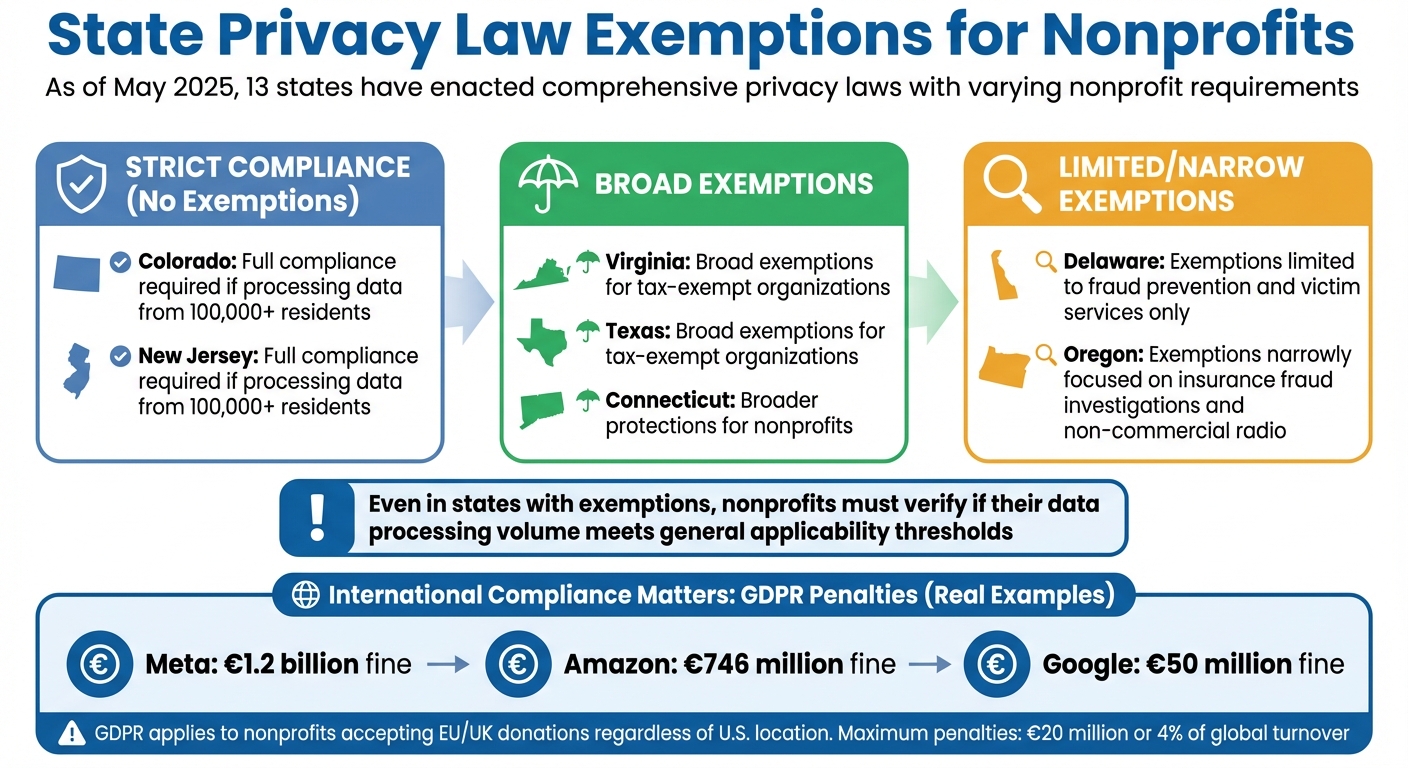
As of May 2025, 13 states have enacted comprehensive privacy laws, with Tennessee, Minnesota, and Maryland expected to join later that year. Not every state offers nonprofits a free pass. For instance, Colorado and New Jersey demand full compliance if your organization processes data from 100,000 or more residents, regardless of your tax-exempt status. Even in states with exemptions, nonprofits must check if their data processing volume meets general applicability thresholds.
These complexities are further compounded by international regulations like GDPR and the growing patchwork of state privacy laws.
GDPR Requirements
If your nonprofit accepts donations from individuals in the EU or UK, the GDPR applies - even if your office is based in Des Moines or Dallas. GDPR focuses on the data subjects rather than the organization's physical location. This means nonprofits must secure explicit consent for marketing, honor requests for data access or deletion, and ensure any data transfers to the U.S. are safeguarded using mechanisms like Standard Contractual Clauses.
The financial risks of non-compliance are huge. Consider the fines: €1.2 billion for Meta, €746 million for Amazon, and €50 million for Google. As privacy attorneys Steven Farmer and Amy Y. Liu from Pillsbury Winthrop Shaw Pittman explain:
The GDPR also requires organizations to be able to demonstrate compliance with the principles (e.g., by reference to policies, procedures, internal records, etc.).
Whether large or small, nonprofits must adopt robust policies to meet these stringent requirements.
CCPA and State Privacy Laws
California's privacy laws, particularly the California Privacy Rights Act (CPRA), introduce stricter rules for handling Sensitive Personal Information (SPI). This includes data like social security numbers, precise geolocation, and financial account details, all of which require extra care. Donors in California have the right to limit how their SPI is used.
State privacy laws differ widely, adding to the challenge. For example:
- Virginia and Texas provide broad exemptions for tax-exempt organizations.
- Delaware limits its exemptions to fraud prevention and victim services.
- Connecticut offers broader protections for nonprofits, while Oregon's exemptions are narrowly focused on insurance fraud investigations and non-commercial radio.
To navigate these differences, nonprofits need to consider where their donors live, not just where they operate.
Beyond privacy laws, payment processing brings another layer of compliance requirements.
PCI Compliance for Payment Processing
When donors enter their credit card details, your nonprofit must adhere to the Payment Card Industry Data Security Standard (PCI DSS). Unlike government regulations, PCI DSS is an industry-enforced requirement upheld by card brands and payment processors. Compliance expert Barnard Crespi emphasizes:
Nonprofits must continuously update and test their security measures to comply with PCI DSS.
The specifics of PCI compliance depend on your transaction volume and payment methods. For nonprofits working with multiple payment processors, this may mean completing different Self-Assessment Questionnaires (SAQs) for each processor. The rollout of PCI DSS v4.0.1 further highlights the importance of staying up-to-date with evolving standards to safeguard donor financial data effectively.
Creating a Sponsorship Privacy Policy
A privacy policy is your public commitment to safeguarding personal information. Hans Skillrud, Co-Founder of GiveWP, puts it simply:
A Privacy Policy is a document that describes your privacy practices to anyone who visits your website.
For sponsorship programs, this commitment takes on added importance. You're handling sensitive information from donors and beneficiaries, so transparency and trust are non-negotiable.
Why It Matters
The stakes couldn’t be higher. Studies show that 32% of people have switched companies due to poor privacy practices, and 70% have withheld personal information because of privacy concerns. A well-crafted privacy policy isn’t just a legal box to check - it’s a trust-building tool that can directly impact donor relationships.
Core Components of a Privacy Policy
To meet legal requirements and build confidence, your sponsorship privacy policy needs to include specific elements. Here’s what to focus on:
- Contact Information: Provide a dedicated email address and physical address where sponsors can direct privacy-related questions.
-
PII Categories: Clearly outline the types of Personally Identifiable Information (PII) you collect, such as names, email addresses, phone numbers, physical addresses, and IP addresses . Be transparent about why each piece of data is needed. As the Electronic Frontier Foundation advises:
If you aren't using the data, you likely don't need it.
- Data Usage: Limit data collection to what’s necessary for your sponsorship program. This approach, known as data minimization, ensures you’re only gathering what directly supports your operations.
- Tracking Technologies: Disclose any tracking tools like cookies, Facebook Pixels, or Google Analytics. Make sure your cookie consent interface distinguishes between essential and marketing purposes.
- Third-Party Sharing: Detail what data is shared, who it’s shared with, and how sponsors can opt out. For example, if you use payment processors, mention your PCI compliance measures without exposing sensitive details.
- User Rights: Explain how sponsors can access, correct, or delete their data, along with the timelines for data retention . The UK GDPR emphasizes that privacy information should be clear and easy to understand.
- Security Measures: Offer a general overview of how you protect sponsorship data, such as encryption and access controls.
- Retention Periods: Specify how long data is kept and any automatic deletion policies.
- Effective Date: Include the current policy date and a history of updates.
Here’s a quick summary of these components:
| Component | What to Include |
|---|---|
| Contact Information | Email, physical address, and website administrator details |
| PII Categories | Names, emails, phone numbers, addresses, IP addresses, and payment details |
| Data Usage | Legitimate purposes tied to sponsorship operations |
| Tracking Disclosure | Cookies, pixels, analytics tools, and consent mechanisms |
| Third-Party Sharing | Categories of recipients, opt-out options, and vendor safeguards |
| User Rights | Access, correction, deletion, and objection instructions |
| Security Measures | Encryption, access controls, and audit practices |
| Retention Periods | Data retention timelines and deletion policies |
| Effective Date | Current date and update history |
Transparency with Sponsors and Donors
Once your privacy policy is in place, transparency in donor communications becomes the next priority. The Information Commissioner’s Office highlights:
Transparent processing is about being clear, open and honest with people from the start about who you are, how and why you use their personal information, and their rights.
Make your policy easy to find. Avoid burying it under vague links like "Legal Documents" in your website footer. Since the 2010 Cambridge Analytica scandal, donors have become far more cautious about how their data is used. They’re actively looking for your privacy policy, so make it accessible.
Also, steer clear of dark patterns - design tricks that manipulate consent. Examples include pre-checked boxes for newsletters or making the "Accept" button more prominent than the "Decline" option . A thoughtful approach, like the Internet Archive’s decision to offer a plain-text email option without tracking data, can go a long way in earning trust.
Give sponsors control over their marketing preferences. They should be able to easily opt in or out of communications like newsletters, event invites, or updates about program impacts. Using a Consent Management Platform can help you collect and document these preferences.
Finally, remember this: PII belongs to the individual, not your organization. By respecting this principle and being upfront about how data is handled, you turn a legal requirement into a competitive edge. In fact, 94% of Americans say they’d switch to a company that prioritizes data privacy.
To maintain trust and stay compliant, plan to review and update your privacy policy annually or whenever laws or practices change . With more than 30 privacy bills currently in development worldwide, staying up-to-date is critical to avoiding penalties and protecting your reputation.
Secure Data Management Practices
Creating solid privacy policies is just the beginning. The real challenge lies in how you manage and safeguard the data you collect. Rick Cohen, Chief Operating Officer at the National Council of Nonprofits, highlights this perfectly:
Even the best privacy policies on the planet are useless unless everyone with access to the data both know and follow the policies.
Your sponsorship program thrives on trust, and that trust depends on keeping donor and beneficiary information safe. Let’s explore how to make that happen.
Encryption and Access Controls
Encryption is your first line of defense, ensuring that even if data is intercepted, it remains unreadable. It’s crucial to encrypt data in two scenarios: while it’s being transmitted over the internet (in transit) and when it’s stored in your database (at rest). A simple yet effective step is making sure your website operates with HTTPS by default, protecting every interaction between visitors and your site.
Encryption works best when paired with strict access controls. Use role-based permissions so team members only access the data necessary for their roles. For instance, a volunteer coordinator shouldn’t have access to payment processing details. Strengthen these accounts with strong, unique passwords and enable multi-factor authentication (MFA). MFA adds an extra layer of security, such as a one-time code sent to a phone, significantly reducing unauthorized access attempts.
Another best practice is data minimization - only collect what’s absolutely necessary, like names, contact details, and donation amounts. Once the data is no longer needed, delete it. These steps create a strong technical foundation, but technology alone isn’t enough - your team must also follow these protocols.
Staff Training on Privacy
Your team can be your greatest strength - or your weakest link. Regular training ensures they understand not just how to protect data, but also why it matters. When staff recognize they’re safeguarding real people’s sensitive information, they’re more likely to remain vigilant.
Training should include practical skills like identifying phishing emails, verifying caller identities, and handling data properly. It should also cover your organization’s legal responsibilities under data protection laws. This knowledge reinforces the trust donors place in your organization. Given that nearly 70% of donors say they need to trust a charity before donating, one careless mistake could have serious consequences.
Make training an ongoing effort, not a one-and-done activity. As threats evolve, so should your team’s knowledge. Jenny Phipps from Qlic IT for Charities puts it clearly:
Data protection is not a one-time task, it's an ongoing commitment to the people who trust your charity with their information.
Regular Security Audits
Even with strong policies and well-trained staff, you need to check that everything is functioning as it should. Security audits help identify weaknesses before they turn into problems. Aim to conduct these audits annually and after any major organizational changes.
During an audit, review who has access to supporter data, assess your encryption standards, and ensure third-party vendors meet your security requirements. Tools like Privacy Badger or Blacklight can help you spot invasive trackers on your website. If you rely on analytics, consider moving away from platforms like Google Analytics to privacy-conscious alternatives such as Matomo, which supports custom data retention and anonymization.
With 19 U.S. states now enforcing privacy laws - some of which specifically apply to nonprofits - compliance isn’t optional. Regular audits not only help you meet these legal requirements but also protect the trust of those who rely on you to keep their information secure.
Selecting Privacy-Compliant Sponsorship Platforms
When you've established strong internal data protection practices, the next step is choosing a sponsorship platform that aligns with your privacy standards. This choice directly impacts the trust donors and beneficiaries place in your organization.
Privacy Features of HelpYouSponsor
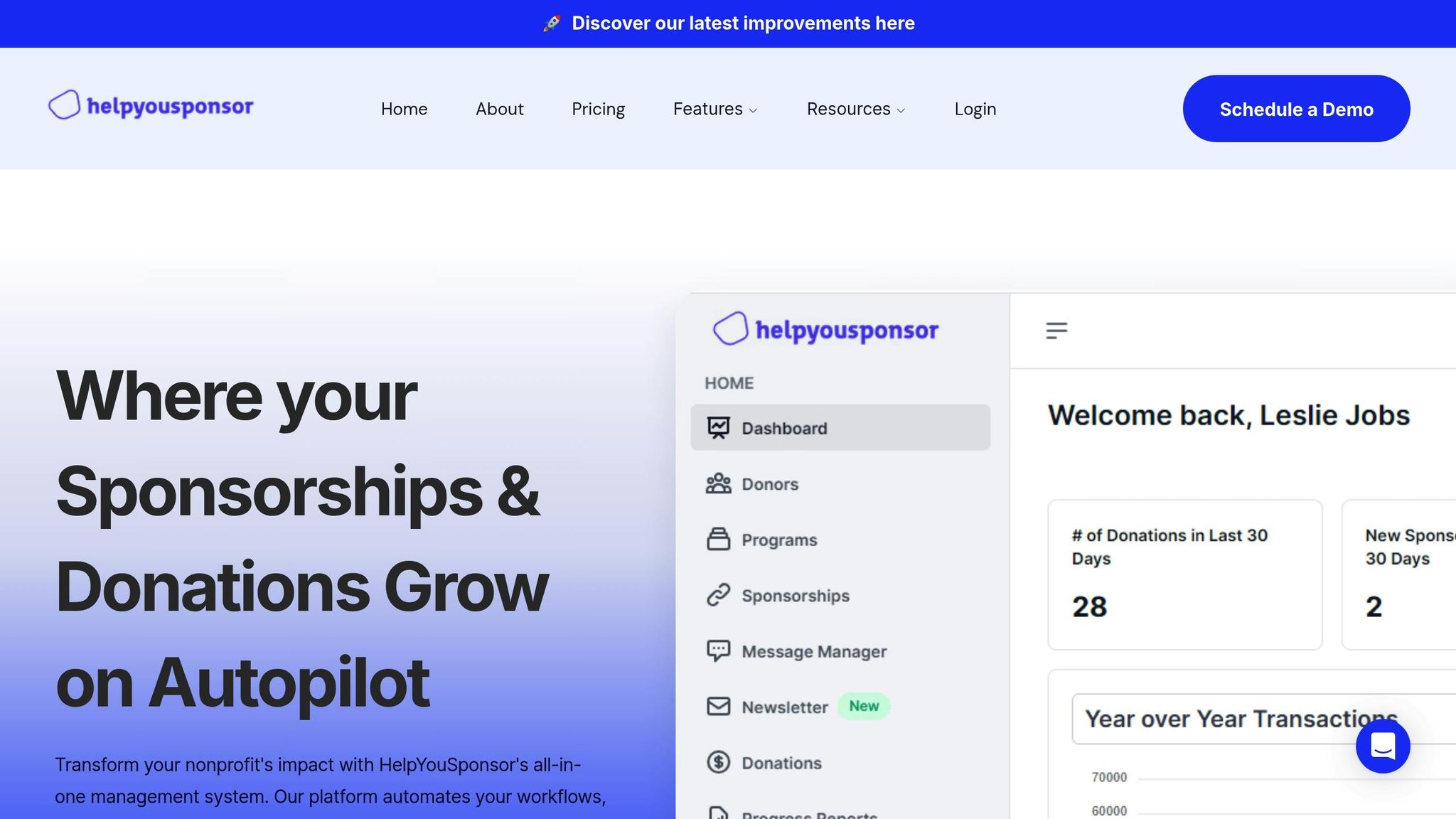
HelpYouSponsor prioritizes privacy, offering tools designed to safeguard both donor and beneficiary information. Key features include end-to-end encryption for secure data handling - whether it's in transit or stored - and role-based access controls that limit access based on job responsibilities. For instance, volunteers can't view payment details, and finance staff are restricted from accessing private beneficiary communications [17].
To protect beneficiaries, HelpYouSponsor uses identity masking, replacing real names with alpha or numeric sponsorship titles. The platform also offers private albums, requiring sponsors to log in to view photos, and allows profiles to be marked as "Hidden" - visible only to assigned sponsors. Additionally, it automatically calculates ages from birthdates, keeping exact dates private. Conversations between sponsors and beneficiaries are safeguarded through moderated messaging, where admins review messages before they are sent.
HelpYouSponsor also supports compliance with GDPR and CCPA through built-in tools like explicit consent mechanisms and cookie management. For donations, it ensures PCI-compliant payment processing, offering secure, mobile-friendly checkout experiences. By centralizing donor data, the platform minimizes risks associated with scattered information storage [17]. As Celestine Bahr, Director Legal, Compliance & Data Privacy at Usercentrics, emphasizes:
Charities work in sensitive contexts, so trust is the currency. Treat supporters like customers: be transparent; collect only what you need; and separate purposes, like donations, programs, and marketing.
By integrating these privacy-focused features, HelpYouSponsor helps organizations meet stringent data protection standards while maintaining trust and transparency with their stakeholders.
Vendor Privacy Checklist
To ensure any sponsorship platform meets your privacy requirements, use this checklist during your evaluation:
| Privacy Feature | What to Verify |
|---|---|
| Data Encryption | Verify encryption for data in transit (HTTPS) and at rest. |
| Access Controls | Confirm role-based permissions and multi-factor authentication are in place. |
| Consent Management | Ensure users can withdraw consent as easily as they gave it. |
| Data Subject Rights | Check if the platform handles access, correction, and deletion requests within 30 days. |
| Breach Response | Look for tools to detect and document breaches within 72 hours. |
| Search Restrictions | Confirm settings limit Google and Bing indexing of profiles. |
| Compliance Updates | Verify the platform updates automatically for new privacy laws. |
Carefully review the vendor's privacy policy to understand how data is collected, processed, and shared. Test the consent mechanisms - if declining consent is harder than accepting it, that's a warning sign. Keep in mind, privacy law violations can result in fines starting at $2,500 per website visitor, making it critical to choose a platform that not only builds trust but also shields your organization from financial liabilities.
Transparency and Confidentiality in Donor Communications
Nonprofits are held to high standards when it comes to safeguarding data. In fact, 76% of donors expect their personal information to be as secure as it would be with major corporations. At the same time, nonprofits must also protect the confidentiality of vulnerable beneficiaries. The challenge lies in being transparent about data practices while ensuring sensitive information remains secure.
Start by clearly explaining what data you collect and why. Use straightforward, accessible language. As the Electronic Frontier Foundation puts it:
Key to keeping your visitors' data safe is letting them know what information you are collecting, in clear and certain terms. Eliminate 'dark patterns' that might lead users into saying 'yes, please collect my data,' without really meaning it.
Avoid practices like pre-selected checkboxes or hidden tracking mechanisms. These small adjustments in communication can complement your broader strategies for secure data management.
Respecting Donor Privacy in Email Communications
Email practices can also impact donor trust. For instance, two-thirds of emails include tracking pixels that monitor when and where messages are opened. In August 2022, the Internet Archive addressed this issue by informing users that it tracked open rates to identify inactive addresses. They also offered a plain-text option free of tracking. You can adopt similar measures - disable invasive tracking and instead use UTM parameters to gauge campaign success without compromising donor privacy.
Protecting Beneficiaries While Sharing Impact
When sharing impact stories, use aggregate or anonymized data to protect the identities of beneficiaries. Replace specific names with generic terms like "Individual Recipient" and describe outcomes in general terms. This approach ensures you can highlight your organization’s work without increasing the vulnerability of the people you serve. Nonprofits often work with at-risk populations, so ethical data practices are not just important - they’re essential.
Transparency in Automated Decisions
If your organization uses predictive analytics for donor segmentation or personalized outreach, transparency is key. Research shows that 31% of donors would reduce their contributions if they perceived AI usage as invasive. To avoid this, explain how automated decisions are made and maintain human oversight for meaningful donor interactions. Carolina Bendaña, Director of Media and Data Services at Stephen Thomas Ltd., emphasizes:
The way we handle donor communications plays a significant role in donor retention. Having a designated team that can provide general information about where a donor's name was obtained, the frequency of communications, opt-out procedures, and where to find the privacy policy is crucial.
Building Trust Through Privacy
Strong data management is essential, but privacy is what truly builds trust in sponsorship programs. When donors share their personal and financial information, they expect it to be safeguarded. As Data Sentinel explains:
For charities and not-for-profit organizations, donor data is not just a tool for effective fundraising, but a key element in fostering trust, transparency, and lasting relationships with supporters.
This focus on privacy directly impacts donor behavior and retention. Consider this: nonprofits often face donor retention rates of just 35%, with around 70% of donors contributing only once or twice [17]. By adopting practices like data minimization, using anonymous defaults, and clearly communicating how donor information is handled, you show donors that their trust is well-placed. Organizations that emphasize transparency and privacy often see better results - 72% of nonprofit leaders report that personalized donor journeys, built on secure and clean data, help them engage more effectively with supporters [17].
Privacy is about more than just meeting legal requirements; it’s a core part of ethical stewardship. Jared Heller, Information Security Engineer at Stelter, highlights this point: "Security is not just an IT issue. It's a key part of donor stewardship". This means regularly training staff, reviewing third-party vendors (ideally twice a year), and fostering a culture that puts privacy first.
FAQs
Does GDPR apply if my nonprofit is based in the U.S.?
Yes, it does - under certain conditions. If a U.S.-based nonprofit has members, employees, or volunteers located in the European Economic Area (EEA), it falls under GDPR regulations. Additionally, if the nonprofit offers goods or services to individuals in the EEA or monitors their behavior (like tracking website activity), compliance with GDPR is mandatory.
This means nonprofits must adhere to GDPR's data protection rules whenever they interact with or handle the personal data of individuals in the EEA. Ignoring these requirements could lead to penalties, so it's crucial to understand and follow the law when operating in this context.
What donor and beneficiary data should we avoid collecting?
Organizations should steer clear of gathering personal details that might jeopardize an individual’s privacy or safety. This includes names, addresses, payment information, phone numbers, email addresses, and demographic data like race or sexual orientation. Furthermore, collecting highly sensitive information - such as the addresses of shelters or specifics about vulnerable groups - should be avoided to mitigate risks in the event of unauthorized disclosure.
What should we ask a sponsorship platform about privacy?
When evaluating a sponsorship platform, it's essential to dig into its security protocols. Look for features like multi-factor authentication and encryption to safeguard donor and beneficiary information. Confirm that the platform complies with privacy regulations such as GDPR and CCPA, and check if it has transparent data policies in place. These should include processes for informed consent, as well as clear guidelines for users to access or delete their data.
Additionally, ask about the platform's practices regarding data sharing and whether it limits unnecessary data collection. It's also worth finding out if the staff receives training on privacy best practices to ensure sensitive information is handled responsibly.