
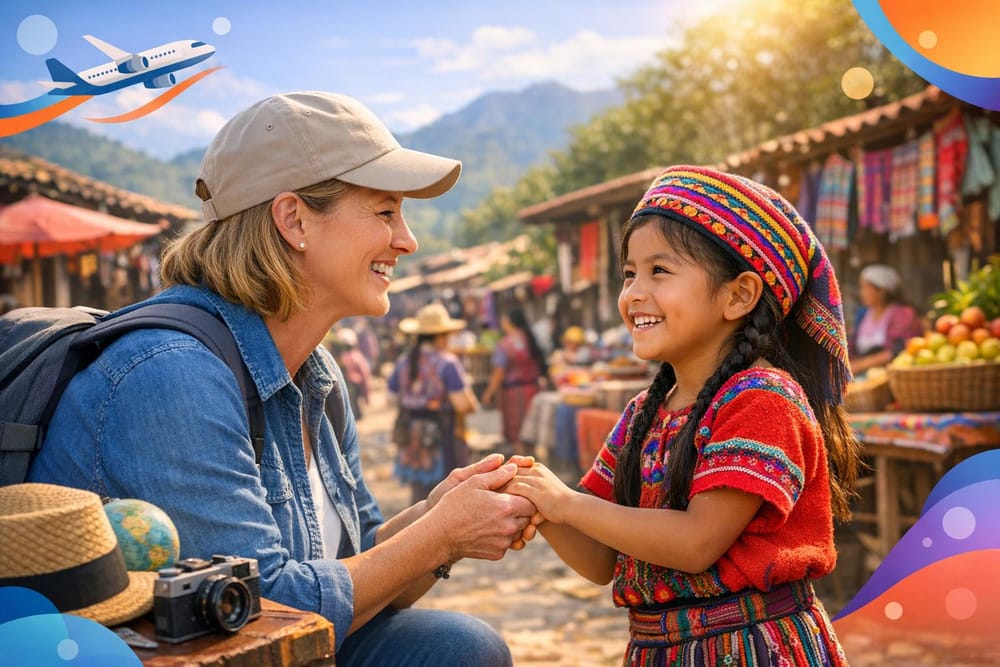
Visiting Sponsored Children: Key Steps
Gratona
Meeting your sponsored child is an unforgettable experience that goes beyond regular contributions and letters. It offers a chance to witness the impact of your support on their life, family, and community. However, planning such a visit requires preparation and compliance with specific guidelines to ensure safety and meaningful interactions. Here’s a quick summary of what you need to know:
- Plan Ahead: Notify the organization 8 weeks to 6 months in advance, depending on how they manage international child sponsorship programs.
- Background Checks: Required for all visitors; fees vary by organization.
- Visit Types: Options include individual visits, group trips, or virtual meetings.
- Rules to Follow: Visits are supervised, and personal contact details or social media connections with the child are prohibited.
- Travel Coordination: Handle your own travel but work closely with local staff for logistics.
- Interaction Guidelines: Dress modestly, respect local customs, and avoid giving cash or lavish gifts.
Visit Policies and Requirements
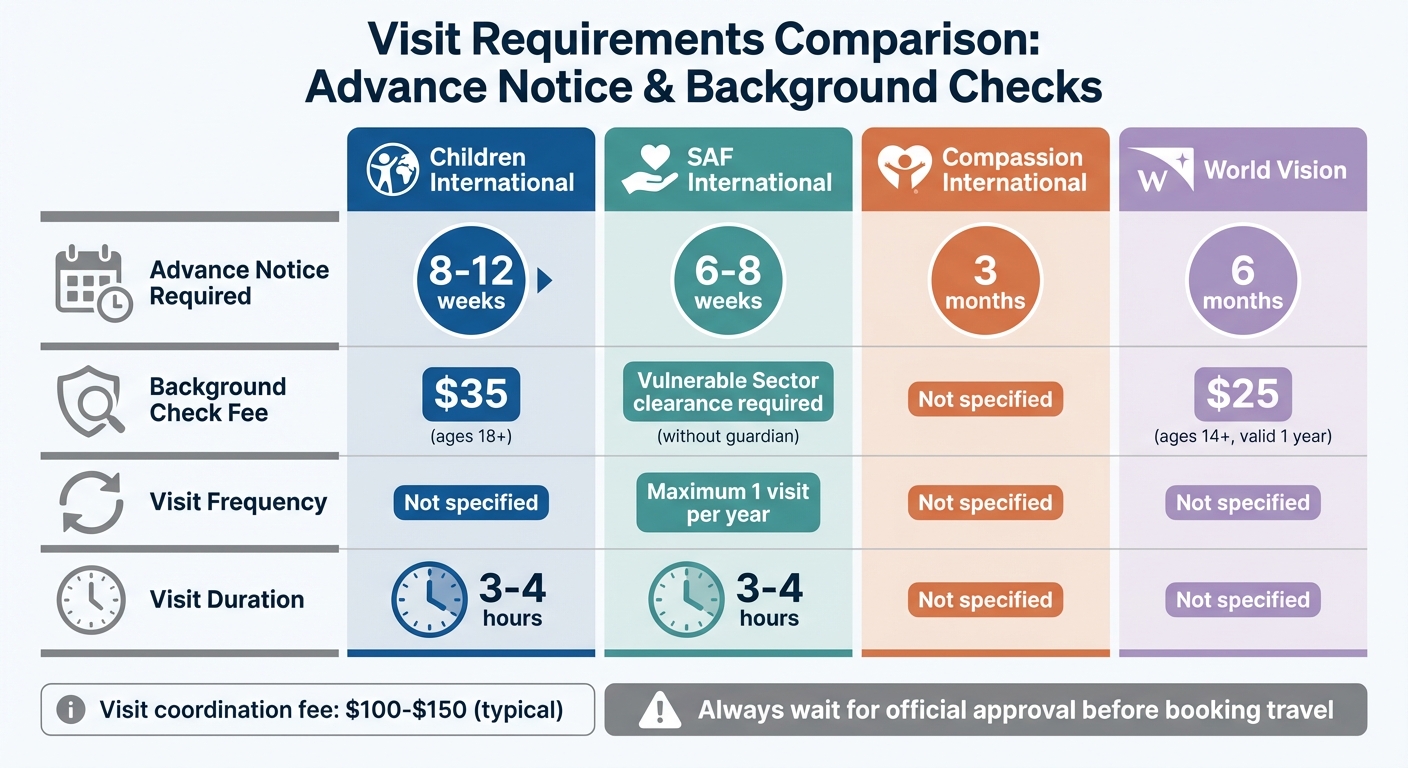
Sponsored Child Visit Requirements by Organization: Advance Notice and Background Check Fees
Understanding visit policies is crucial to ensure children’s safety and create meaningful interactions. Each nonprofit organization has its own rules aimed at protecting children while making visits rewarding for everyone involved. These policies are a key factor when you choose the best child sponsorship program for your goals.
Types of Visits
There are several ways to connect with sponsored children:
- Individual sponsor visits, where you handle travel and logistics.
- Planned group trips, which accommodate up to 25 participants.
- Virtual visits, an option for sponsors who cannot travel.
Before planning, check for any program-specific restrictions or child protection measures.
Program Restrictions and Child Protection
Certain programs restrict in-person visits. For example, World Vision limits visits to specific regions and prohibits sharing photos of children from certain countries. To prioritize safety, all visits must be supervised by organization staff or certified hosts. Sponsors are not allowed to take children to private locations, such as hotels or swimming pools, and direct communication via social media is strictly prohibited. Additionally, sharing personal contact details - like your home address, phone number, or email - is not permitted. These rules ensure visits align with child protection standards and organizational goals.
Eligibility and Advance Notice
Advance notice requirements vary by organization:
- Children International: 8–12 weeks
- SAF International: 6–8 weeks
- Compassion International: 3 months
- World Vision: 6 months
Make sure to book travel only after receiving official approval. Background checks are mandatory to ensure child safety. Fees for these checks differ: Children International charges $35 for visitors aged 18 and older, World Vision charges $25 for visitors 14 and older (valid for one year), and SAF International requires a Vulnerable Sector clearance for visits without a guardian.
Some organizations also limit how often visits can occur. For instance, SAF International allows only one visit per year to avoid overwhelming children and local staff. Visits are typically scheduled during business hours (Monday–Friday) and last about 3–4 hours. Once all requirements are met, you can proceed to finalize your visit plans.
Planning and Approval Process
Once visit policies are set, the next step involves formal planning and securing approval. This includes submitting detailed visit requests, completing necessary screenings, and coordinating with local teams to finalize logistics.
Submitting a Visit Request
Reach out to your organization using their preferred method. For example, Children International accepts requests via phone or email through their Care Team, SAF International uses an online donor portal, and World Vision requires specific application forms to be emailed to their visit specialist. Your request should include proposed travel dates, flight details, and details about everyone traveling with you. Wait for official approval before booking any airfare or accommodations.
Pay attention to blackout periods, as most organizations do not arrange visits on weekends or local holidays, allowing staff to spend time with their families. About three weeks before your visit, confirm final logistics with the local field office.
Background Checks and Required Agreements
Organizations typically require background checks, which are processed according to their specific procedures and fees. For example, SAF International mandates a Vulnerable Sector clearance in cases where a parent or guardian won’t be present or if the child is orphaned. These checks usually take around 30 days and remain valid for a year.
You’ll also need to sign liability waivers, safeguarding policies, and conduct codes that outline rules about physical boundaries and photography. World Vision has an additional requirement for a "Kidnapping and Hostage-Taking" policy form. Each adult visitor must provide a unique email address for the screening process.
Once all screenings and agreements are complete, you can move forward with finalizing the details with local staff.
Coordinating with Local Staff and Families
After completing background checks and submitting forms, the local field office will step in to handle coordination. They’ll contact the child’s family, arrange meeting locations, and manage logistics, such as scheduling time off from school or work. Avoid mentioning the visit in any correspondence until you receive official approval to prevent any potential disappointment if plans change.
Stay in touch with the local office to ensure everything is on track. During the visit, a staff member or certified host will supervise to facilitate communication and uphold child protection standards.
Travel, Logistics, and Safety
Travel Planning and Preparation
Before booking any travel, make sure you’ve received official approval. This process ensures the organization meets ethical standards for child sponsorship regarding protection and legal compliance. Once approved, you’ll need to handle your own arrangements for airfare, lodging, and airport transportation. Check travel advisories on travel.state.gov and the CDC website to stay informed. Also, double-check that your passport and visas are current, confirm international insurance coverage and cell service plans, and register with the Smart Traveler Enrollment Program (STEP) for added safety during emergencies.
When packing, opt for modest clothing, such as shirts that cover your shoulders and skirts or shorts that reach the knee. Leave valuable items like expensive jewelry or high-end electronics at home. After you arrive, the local staff will assist with all the on-ground logistics.
Local Coordination
Once you’re in the country, local staff will take charge of coordinating visit-day details. They’ll arrange meeting locations, provide bilingual translators, and organize schedules to ensure the sponsored child’s family can participate without interfering with school or work commitments. Upon arrival, notify the national office right away and keep their contact information accessible throughout your trip.
A staff member will oversee the visit, which usually lasts three to four hours. These visits typically occur at community centers, program offices, or the organization’s national office - never at hotels or private residences.
Budgeting and Expenses
Prepare for a visit coordination fee of $100–$150, which covers arrangements and basic transportation costs. Be sure to include background check fees in your travel budget as well. Additionally, you’ll need to cover the cost of meals and activities for yourself, the sponsored child, their family, and any accompanying staff or translators.
Cultural Sensitivity and Appropriate Interaction
Once your travel and safety plans are in place, the next step is to focus on interacting respectfully with the local culture.
Learning About Local Customs
Before you travel, take time to research the local customs. Dressing modestly is often a good starting point - jeans and plain T-shirts are usually safe choices, while shorts or flashy clothing might not align with local norms. It's also wise to skip wearing expensive luxury items, as they can highlight economic differences. A great way to connect is by learning a few basic greetings in the local language. Even though translators are available, these small gestures can go a long way in building rapport. Understanding the local culture will also guide you in selecting appropriate gifts and setting respectful boundaries.
Appropriate Gifts and Boundaries
When choosing gifts, aim for items that are simple and practical. School supplies or hygiene products are thoughtful options, and sports equipment like a soccer ball with a pump is often well-received. For families, consider useful household items such as cooking utensils or groceries. However, it’s crucial to have any gifts approved by local staff to ensure they align with cultural norms and don’t unintentionally create tension within the community.
"We do ask you to be sensitive to the child's economic situation and to avoid items that may seem too expensive or lavish." - World Vision
It’s important to avoid giving cash directly to the child or family, as this can disrupt the fundamentals of effective sponsorship programs and foster dependency. Similarly, refrain from sharing personal contact details like your mailing address, email, phone number, or social media profiles. For example, if you receive a Facebook friend request from the child or their family, it’s best to decline. These practices help maintain privacy and ensure a respectful and secure visit.
Privacy, Photography, and Documentation
When it comes to taking photos, always ask for permission from local staff and the family first. Disable geotagging on your device to protect privacy, and carefully check the background of photos to avoid including identifying details like school names or neighborhood signs. If you plan to share photos on social media, stick to using the child’s first name and avoid including their last name, Child ID number, or specific location. Some countries have strict legal rules about photographing children, so always follow the guidelines provided by local staff to ensure compliance and respect for local laws.
Visit Day and Follow-Up
Conduct During the Visit
During your 3- to 4-hour visit, organization staff will supervise to ensure the child's safety and help with communication by providing bilingual interpreters. Stay with your assigned staff member or interpreter at all times, follow their guidance, and respect the program's boundaries. This includes avoiding the exchange of personal contact information - such as your home address, phone number, email, or social media profiles. If the child or their family sends you a Facebook friend request after the visit, it's important to decline it to uphold the program's safety standards.
If you're unsure how to start conversations, the organization will provide conversation starters to help you connect naturally with the child and their family.
Post-Visit Communication and Reporting
Once your supervised visit is complete, take some time to reflect and document your experience. Sending a thank-you message or writing a trip report allows you to share the impact of the visit. This feedback is valuable for improving future sponsor visits.
For any follow-up communication, always use the official channels provided by the organization. Avoid direct contact to ensure compliance with child protection policies. Tools like HelpYouSponsor (/blog) are available to help you manage sponsorships with dedicated software to keep track of your visit details, sponsor interactions, and other records - all while adhering to the program's guidelines.
Conclusion
Visiting a sponsored child is a deeply meaningful experience that calls for thoughtful preparation and respect for established guidelines. Planning ahead ensures the visit aligns with the child’s schedule, while background checks, conduct agreements, and staff supervision play a crucial role in safeguarding the children and maintaining the integrity of reputable child sponsorship programs.
Your actions during the visit are just as important as the preparation. Following local customs and respecting approved gift practices help create a respectful and positive interaction. These boundaries not only protect the child but also allow for a heartfelt and genuine connection .
"You are never the same again ... if you get to meet your child and see the results … It is an indescribable feeling to know - and, in my case, actually hear from a mother - how what I've done has changed their lives." - Maryli R., CI sponsor
FAQs
What should I know before visiting my sponsored child?
When planning a visit to your sponsored child, it’s important to confirm your travel dates well ahead of time. Most organizations ask for at least 8–12 weeks' notice to handle logistics, secure permissions, and prepare a safe environment for the meeting. To start, reach out to the organization’s headquarters or complete a visit request form as early as possible. Make sure to keep a copy of your confirmation for your records.
You’ll also need to gather all the necessary documents. This typically includes a valid U.S. passport, any required visas, proof of health insurance, and updated immunization records. Sponsors who are 18 or older might also be required to undergo a background check and sign consent forms. Be sure to budget for your trip - expenses like airfare, lodging, meals, and local transportation can add up to anywhere between $2,500 and $4,000, depending on the destination. It’s also a good idea to consider travel insurance in case of unexpected emergencies.
Finally, keep safety and cultural respect in mind. Avoid posting identifiable details about the child online, dress modestly, and be mindful of local customs. To make the visit more special, consider bringing a small, culturally appropriate gift and preparing some simple conversation starters. These thoughtful gestures can help ease any initial nerves and create a meaningful connection between you and the child.
Why are background checks and supervision important for visits?
Background checks play a crucial role in confirming that sponsors do not have a history that could jeopardize a child's safety. By adding supervised visits into the mix, an extra safeguard is established, ensuring every interaction remains safe, respectful, and in line with child-protection guidelines. Together, these steps help create a secure and supportive environment for all parties involved.
What types of gifts are appropriate to bring when visiting my sponsored child?
When choosing a gift for your sponsored child, it’s essential to start by checking the organization’s visitor and child-protection guidelines. These rules will help you understand what’s acceptable and what to avoid - like cash, perishable items, or anything that might clash with local customs. To make sure your gift is both thoughtful and respectful, reach out to the local program coordinator or staff for advice. Good options often include school supplies, simple clothing, or toys that are appropriate for the child’s age and fit within the community’s traditions.
Be sure to plan ahead - ideally, at least eight weeks before your visit. This gives you time to ensure the gift complies with the guidelines and accounts for any necessary shipping. Tools like HelpYouSponsor can make the process easier by allowing you to track the child’s preferences, flag restricted items, and stay in line with the organization’s policies. With careful planning, your gift can be both meaningful and considerate of the child’s family and culture.