
The Future of Sponsorship Programs: Smarter, More Connected Giving
Gratona
Nonprofits are facing growing challenges as outdated systems fail to meet modern donor expectations. Today, donors demand transparency, real-time updates, and personalized interactions - elements that traditional methods can't provide. The shift to digital tools like AI, blockchain, and mobile apps is transforming sponsorship programs, making them more efficient and engaging.
Key takeaways:
- Donor expectations have changed: 67% of donors prefer online giving and want immediate feedback on their contributions.
- Automation saves time: Nonprofits using digital tools can cut administrative tasks by up to 60%.
- Retention matters: Recurring donors have a 90% retention rate compared to 46% for one-time donors.
- Tech improves transparency: Blockchain tracks funds, while mobile apps deliver instant updates and foster direct communication.
Platforms like HelpYouSponsor simplify operations by automating tasks, centralizing data, and enabling donor-beneficiary connections. These tools not only reduce inefficiencies but also align with emerging sponsorship models, such as child-led and hybrid giving, which focus on deeper emotional connections and broader community impact.
Modernizing sponsorship programs is no longer optional - it's essential for building trust, retaining donors, and scaling effectively.
Technologies Changing Sponsorship Programs
AI and Data Analytics for Personalized Giving
Artificial intelligence is reshaping how nonprofits connect donors with beneficiaries. By analyzing donor behavior - like giving history, engagement levels, and communication preferences - AI systems can predict what types of stories or updates will resonate with individual sponsors. This means donors receive tailored content instead of impersonal, mass-distributed emails.
Data analytics plays a key role in keeping donors engaged. By monitoring metrics such as email open rates, app interactions, and response times, organizations can spot early signs of declining interest. This allows them to take timely steps to re-engage supporters. On top of that, AI can sift through large datasets to forecast future donation trends, helping nonprofits better plan budgets and allocate resources. Together, these tools are driving a shift toward data-driven sponsorship programs that focus on meaningful, personalized connections.
While AI enhances personalization, blockchain technology takes transparency to new heights.
Blockchain for Transparent Fund Tracking
Blockchain ensures donors can track their contributions from start to finish. It creates tamper-proof records, showing exactly how funds are received, allocated, and spent, all the way to their impact on beneficiaries. This replaces the old "trust us" model with a system built on verifiable data.
Smart contracts add another layer of accountability by automating spending rules. For instance, funds can be programmed to release only to approved vendors or capped to ensure administrative costs don’t exceed a set percentage. As One Hundred Nights explains:
Instead of proving after the fact that you followed your policies, you encode the policies into smart contracts that make it technically impossible to violate them.
Some nonprofits are now combining blockchain with AI to make technical data - like wallet addresses and transaction hashes - more accessible through easy-to-read impact reports. For organizations new to blockchain, starting small is often the best approach. This could mean tracking a single funding stream or focusing on one program area, while first establishing clear metrics to measure impact. After all, even the best technology can’t fix poorly defined goals.
While blockchain secures the flow of funds, mobile apps are revolutionizing how nonprofits keep donors informed and engaged.
Mobile Apps for Real-Time Updates
Mobile apps allow nonprofits to share updates instantly. Donors can receive push notifications when important milestones are reached, such as a child starting school, a new well being completed, or emergency aid being delivered to a family. Field workers can upload photos and videos directly from the site, fostering an immediate and emotional connection.
The most effective apps go beyond updates, offering secure, two-way communication between donors and beneficiaries. Donors can send encouraging messages, while beneficiaries share their progress and stories in real time. This interaction strengthens the emotional bond and trust that increases donor loyalty over time. To ensure functionality in remote areas, many apps include offline features, allowing field staff to collect data and media without internet access, syncing automatically once they're back online. These tools are enhancing both transparency and engagement, setting a new standard for modern sponsorship programs.
5 Powerful Fundraising Tools Top Nonprofits Use
HelpYouSponsor: A Platform for Sponsorship Management
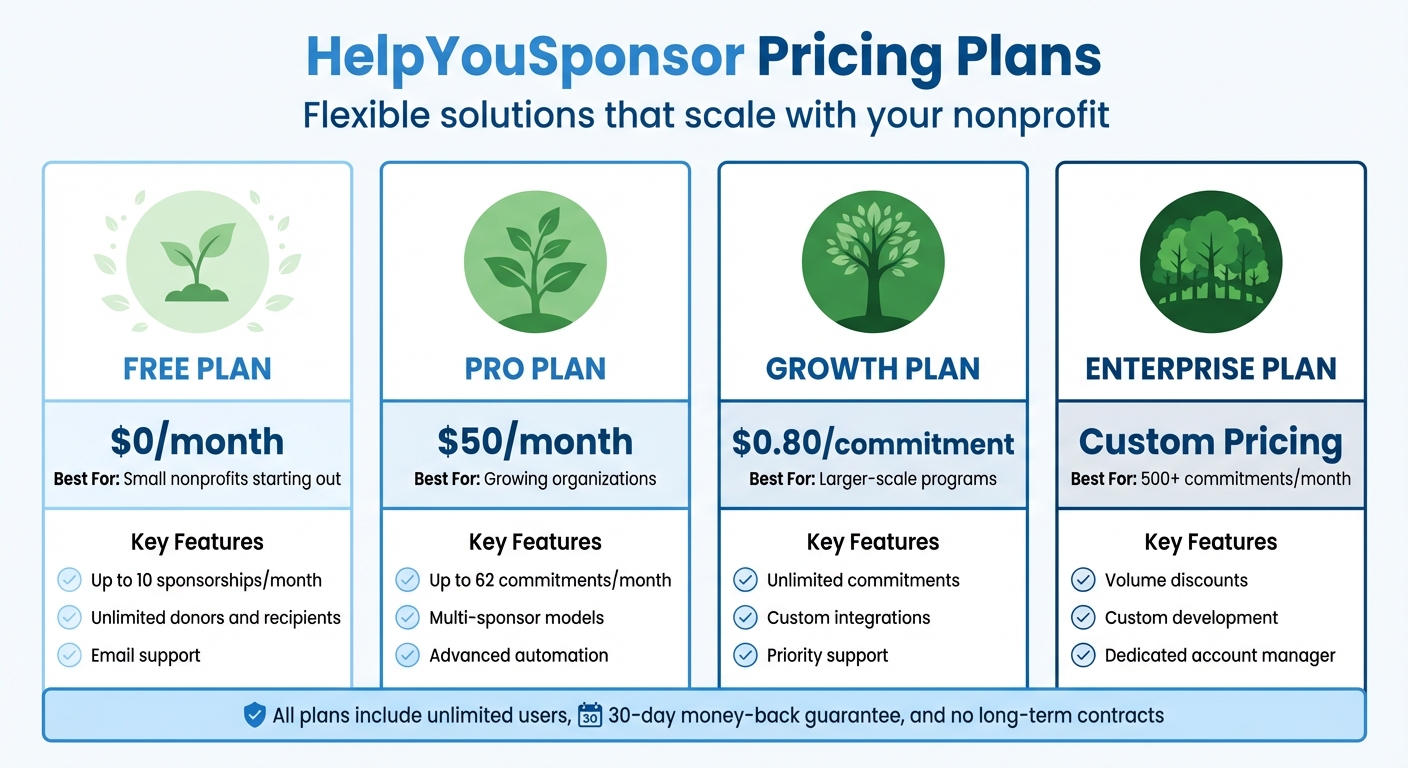
HelpYouSponsor Pricing Plans Comparison for Nonprofits
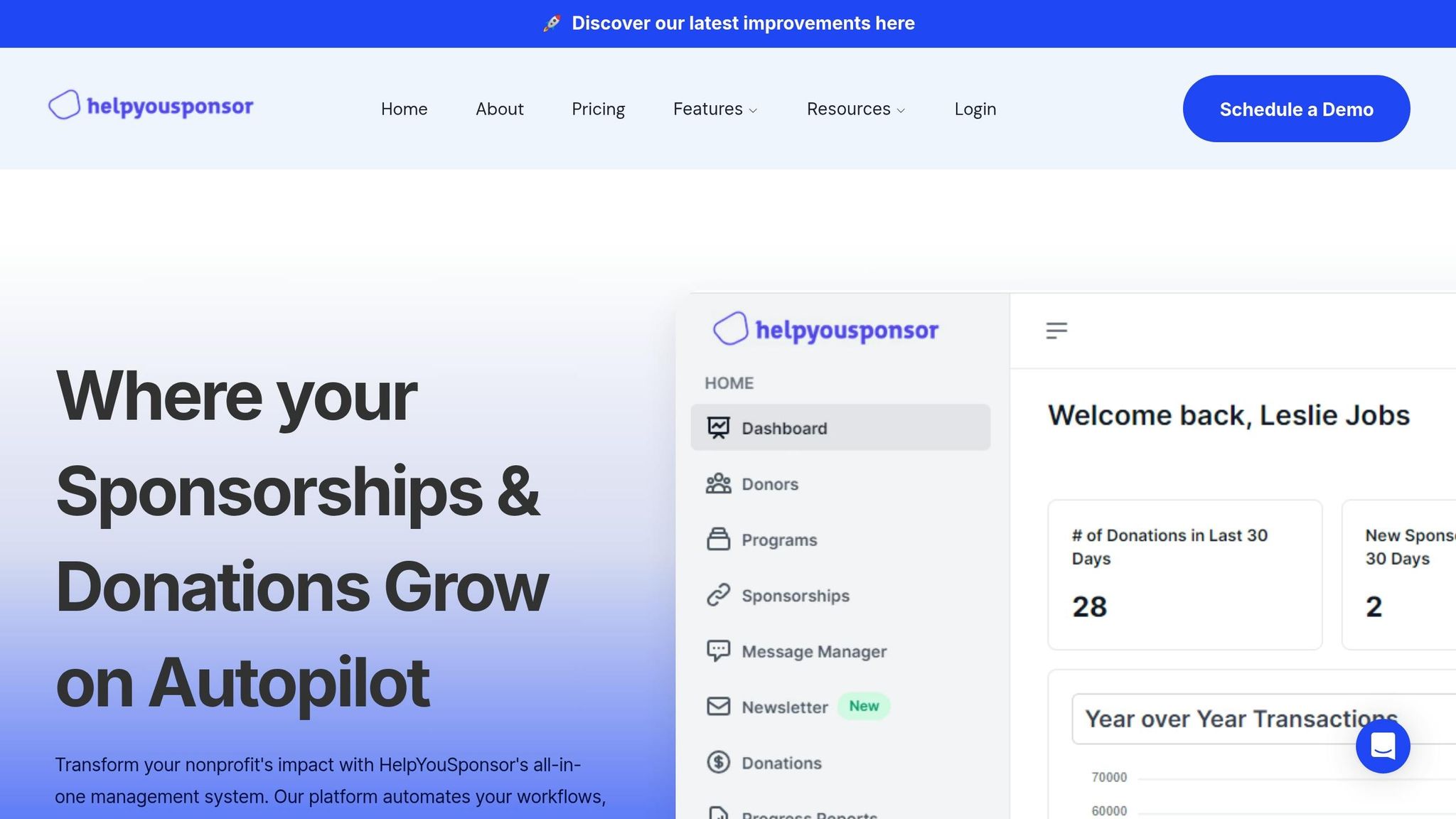
HelpYouSponsor brings together essential digital tools into one easy-to-use platform. Created by experienced sponsorship managers, it’s designed to replace the chaos of spreadsheets that many nonprofits struggle with. The platform centralizes donor and recipient data, automates repetitive tasks, and builds direct connections between sponsors and beneficiaries - all without requiring technical expertise.
The impact speaks for itself: organizations using HelpYouSponsor have managed over $19 million in donations and experienced an average 3.8x increase in sponsorships. With more than 1,500 users, the platform supports a wide range of causes, from child sponsorships to village projects and medical surgeries. Let’s dive into how HelpYouSponsor simplifies operations and amplifies donor impact.
Main Features of HelpYouSponsor
HelpYouSponsor covers the entire sponsorship lifecycle. Its automated workflows handle up to 90% of manual tasks, including receipts, thank-you notes, recurring donation tracking, and year-end statements - all without requiring staff intervention. On average, nonprofits save 20+ hours per week, allowing them to focus more on their mission.
The platform also includes an integrated messaging system for direct communication between donors and beneficiaries. Meanwhile, a self-service donor portal allows sponsors to update payment details and access impact reports independently, cutting down on administrative inquiries. Payment processing integrates seamlessly with Stripe, PayPal, and Authorize.net, automating recurring billing and tracking additional gifts.
What makes HelpYouSponsor stand out is its adaptability. It supports various sponsorship models, whether for individual child sponsorships, pastor support, community projects, or medical surgeries. The platform scales effortlessly, accommodating organizations with as few as 5,000 donors to those managing 50,000 recipients - all without adding extra administrative workload. Custom automation rules and integrations with tools like Mailchimp, Zapier, Salesforce, and QuickBooks further streamline operations.
Security is a priority, with bank-level data encryption, role-based access controls, and GDPR and U.S. data law compliance ensuring that sensitive information remains protected.
Pricing Plans That Scale
HelpYouSponsor offers flexible pricing that grows with your nonprofit. The commitment-based pricing model charges based on the number of sponsorships or donations tracked each month. All plans include unlimited users, a 30-day money-back guarantee, and no long-term contracts.
| Plan | Price | Best For | Key Features |
|---|---|---|---|
| Free | $0/month | Small nonprofits starting out | Up to 10 sponsorships/month, unlimited donors and recipients, email support |
| Pro | $50/month | Growing organizations | Up to 62 commitments/month, multi-sponsor models, advanced automation |
| Growth | $0.80/commitment | Larger-scale programs | Unlimited commitments, custom integrations, priority support |
| Enterprise | Custom Pricing | 500+ commitments/month | Volume discounts, custom development, dedicated account manager |
Most nonprofits begin with the Free plan to explore the platform’s features, then transition to higher tiers as their needs grow.
How to Improve Efficiency with HelpYouSponsor
Stop relying on spreadsheets. The longer you delay, the more inefficiencies pile up. Centralizing data in one system prevents duplicate records and minimizes errors.
Automate key tasks. Features like year-end statements and impact reports keep donors engaged without requiring staff to manually compile data. For example, the "Combine same-day charges" option simplifies transaction management.
Encourage self-service. When donors use the portal to update payment methods and view impact updates, your team spends less time on routine inquiries. Automated sponsor-recipient matching tools can also link donors with beneficiaries instantly, eliminating manual matching altogether.
These tools not only save time but also allow nonprofits to strengthen connections between donors and the people they’re helping.
New Approaches for Better Donor-Beneficiary Connections
While digital tools make processes smoother, it's the emotional bonds that keep donors engaged in the long run. Programs that thrive today focus on building meaningful connections, empowering beneficiaries, and offering flexible giving options to match various donor motivations. By combining digital transparency with real-time updates, these strategies strengthen relationships between donors and beneficiaries, creating a more impactful and enduring connection.
Two-Way Communication and Emotional Connections
Personalized donor communication can transform occasional donors into loyal supporters. Tools like video updates and interactive messaging platforms help create a personal connection, keeping donors emotionally invested. Features such as automated messages and online donor portals make it easy to share real-time impact updates, ensuring donors remain informed and engaged.
But it doesn't stop at communication - new sponsorship models are flipping the script, putting more power in the hands of beneficiaries.
Child-Led and Community-Nominated Sponsorships
Imagine the impact of letting beneficiaries choose their sponsors. That’s exactly what World Vision U.S. introduced with its "Chosen" program in September 2019. In this model, children in developing countries select their sponsors instead of the other way around. Here’s how it works: donors upload their photos during the sign-up process, and these photos are presented to children during "choosing parties" held in communities like those in Kenya and Guatemala.
The results? Over 2,500 initial sign-ups and a significant boost in engagement - response rates more than doubled compared to traditional sponsorship events. This is particularly notable given that contributions in older sponsorship models had been declining by about 1% annually. Donors in the "Chosen" program commit to $39 monthly, a testament to the emotional impact of being selected.
"Once people realize that they can, with a small gesture, put the power to choose in a child's hands, something profound happens."
– Edgar Sandoval, President, World Vision U.S.
This approach not only empowers beneficiaries but also deepens the emotional connection and sense of responsibility for donors.
Hybrid Giving Models for Broader Impact
Some donors want a personal connection, while others are drawn to community-wide results. Hybrid giving models cater to both by combining the emotional engagement of individual sponsorship with the tangible outcomes of community projects. For example, a donor might sponsor a child and simultaneously contribute to building a new water system for the child’s village.
This approach offers a dual benefit: donors see the direct impact of their contributions on individual lives while also witnessing broader community improvements. It appeals to those who value both personal connections and measurable achievements.
| Model Element | Impact on Donor | Impact on Beneficiary |
|---|---|---|
| Individual Sponsorship | Personal emotional connection | Direct, focused support |
| Project-Based (Infrastructure) | Builds donor trust through visible results | Long-term community benefits |
| Community-Nominated | Encourages empowerment and shared purpose | Greater agency and involvement |
These models show that blending personal and community-focused giving can create a lasting and meaningful impact for everyone involved.
Implementation Guide for Nonprofits
Moving your nonprofit to a digital platform can feel daunting, but breaking it into manageable steps - like assessing your current setup and tracking results - makes the process much easier.
Preparing for Digital Change
Start by taking a close look at your current data and processes. The first step is to choose a sponsorship model that fits your organization’s needs:
- Contribution programs: Perfect for scenarios where multiple donors share the cost until a specific dollar amount is met (e.g., $200 for medical care).
- Number of Sponsors programs: Works well for one-to-one sponsorships, such as child sponsorships, where a set headcount is required.
- Campaign programs: Ideal for general funds or emergency relief efforts that don’t involve individual recipients.
Next, inventory the data you already track. For recipients, this might include details like names, ages, locations, and personal stories. For donors, focus on contact information, giving history, and communication preferences. This data will be essential when setting up digital forms. Additionally, gather any email templates you use and determine which staff member’s email address will appear as the sender in automated donor communications.
Once your audit is complete, you’re ready to configure HelpYouSponsor’s tools for a smooth transition.
Setting Up and Optimizing HelpYouSponsor
HelpYouSponsor offers pre-built templates, such as "Child Sponsorship" and "General Campaign", to give you a starting point before customizing your programs. Follow these five steps to set up your program:
- Create a recipient program.
- Define program settings, including costs and sponsorship limits.
- Design recipient and donor profile forms.
- Configure personalized automated donor messages.
- Add individual recipients.
The "Manage Fields" tool allows you to tailor the information collected, ensuring the platform aligns with your existing data structure. To streamline transactions, enable the "Combine same-day charges" feature. This groups multiple commitments into one transaction, saving on processing fees and reducing email clutter. For added convenience, train your team to use the green information icons, which provide real-time guidance as they navigate the platform.
Don’t forget to attach an Auto Email Set to every program. This ensures donors receive immediate and consistent communication, enhancing donor engagement and retention.
Once your program is up and running, the next step is to measure its success.
Tracking and Measuring Success
The metrics you track will depend on the type of program you’re running:
- Contribution programs: Measure total donations against your funding goal.
- Number of Sponsors programs: Monitor the number of active sponsors in relation to the required total.
- Campaign programs: Track the total funds raised versus your target amount.
Green checkmarks on your dashboard indicate that your program is fully configured and ready to launch.
Regularly review your Auto Email Sets to ensure the sender addresses and templates are generating responses. To keep your donation page focused and effective, enable the "Hide Fulfilled Contribution Levels" setting so only active needs are visible to donors. This helps maintain high conversion rates. Additionally, use the custom fields you created during setup to segment donors by demographics or giving patterns. Running reports on these segments can reveal which programs resonate most with your audience. The platform’s donor account tools also let you monitor how supporters interact with their commitments, offering valuable insights into engagement levels.
Conclusion: The Future of Smarter Giving
Sponsorship is evolving from outdated, paper-heavy methods to digital systems that emphasize clarity, efficiency, and genuine connections. Today’s donors want to know exactly how their contributions are being used and seek meaningful interactions with the individuals or communities they support - not just impersonal, once-a-year updates.
HelpYouSponsor is at the forefront of this transformation, simplifying billing, tax receipts, and data management. This allows nonprofit teams to shift their focus from administrative tasks to building real, impactful relationships. Through donor portals, the platform turns routine donations into immersive experiences by providing real-time photos, videos, and updates that keep donors emotionally connected.
Nonprofits that centralize their data, automate repetitive tasks, and embrace dynamic media will stand out. Transitioning from scattered spreadsheets to a unified platform not only ensures data accuracy but also empowers small teams to handle thousands of sponsorships with ease. This approach opens the door to flexible sponsorship models that are more participatory and impactful.
Emerging ideas like child-led and community-nominated sponsorships highlight this shift, giving beneficiaries a voice while leveraging digital tools to scale these respectful partnerships.
The future of giving isn’t just about raising money - it’s about creating deeper connections and maximizing impact through smarter systems. Organizations that adopt these technologies today are setting themselves up for stronger donor loyalty and long-term success.
FAQs
How do I start modernizing our sponsorship program without overwhelming staff?
To modernize your sponsorship program, ease into using automation and digital tools. Begin with tasks that are repetitive and time-consuming, like processing payments, updating donors, and managing communications. Small changes, such as setting up automated recurring donations or personalized outreach, can streamline your workflow and cut down on mistakes. Incorporate real-time dashboards to monitor progress effectively, and make sure your team gets proper training to ensure a smooth shift to these tools.
What donor data should we collect to personalize updates and improve retention?
To build stronger relationships and improve donor retention, it’s essential to gather and use key donor data effectively. Start with the basics: contact details like name, email, phone number, and address. Then, dive deeper into their donation history, including amounts, frequency, and the specific campaigns they’ve supported. Don’t overlook engagement metrics either - track things like event attendance, volunteering efforts, and how they interact with your content.
It’s also important to understand why donors give - their motivations can guide how you communicate with them. Identify their preferred communication channels (email, phone, or even social media), and explore whether they have access to corporate matching programs that could amplify their contributions.
When you use this information thoughtfully, you can create more personalized updates, foster transparency, and deliver experiences that feel tailored to each donor. This not only strengthens connections but also encourages long-term support.
How can we prove where sponsorship funds go without adding more admin work?
Using sponsorship tracking software equipped with real-time reporting and automated data management can help maintain transparency while keeping administrative tasks manageable. These tools automatically produce reports that focus on measurable outcomes, offer user-friendly dashboards for clarity, and simplify communication processes. Additionally, secure, encrypted systems for payments and data handling not only enhance trust but also minimize errors, allowing organizations to showcase responsible use of funds and strengthen donor confidence with ease.