

Building Stronger Sponsorship Communities Through Donor Engagement
Gratona
Donor engagement is the backbone of successful sponsorship programs. When sponsors feel connected to the children they support, they’re more likely to stay involved. This article explores practical ways to strengthen these connections, including:
- Personalized communication strategies: Tailor messages with names, specific updates, and milestones to make sponsors feel valued.
- Sharing impact stories: Highlight the sponsor’s role in a child’s progress through emotional, real-life examples.
- Transparent updates: Provide clear, regular reports on how donations are used and the child’s achievements.
- Virtual events and recognition: Host interactive meet-and-greets and celebrate donor contributions to build a sense of community.
- Donor segmentation: Use data to personalize outreach based on giving history and engagement levels.
Personalized Communication: Creating Stronger Donor Relationships
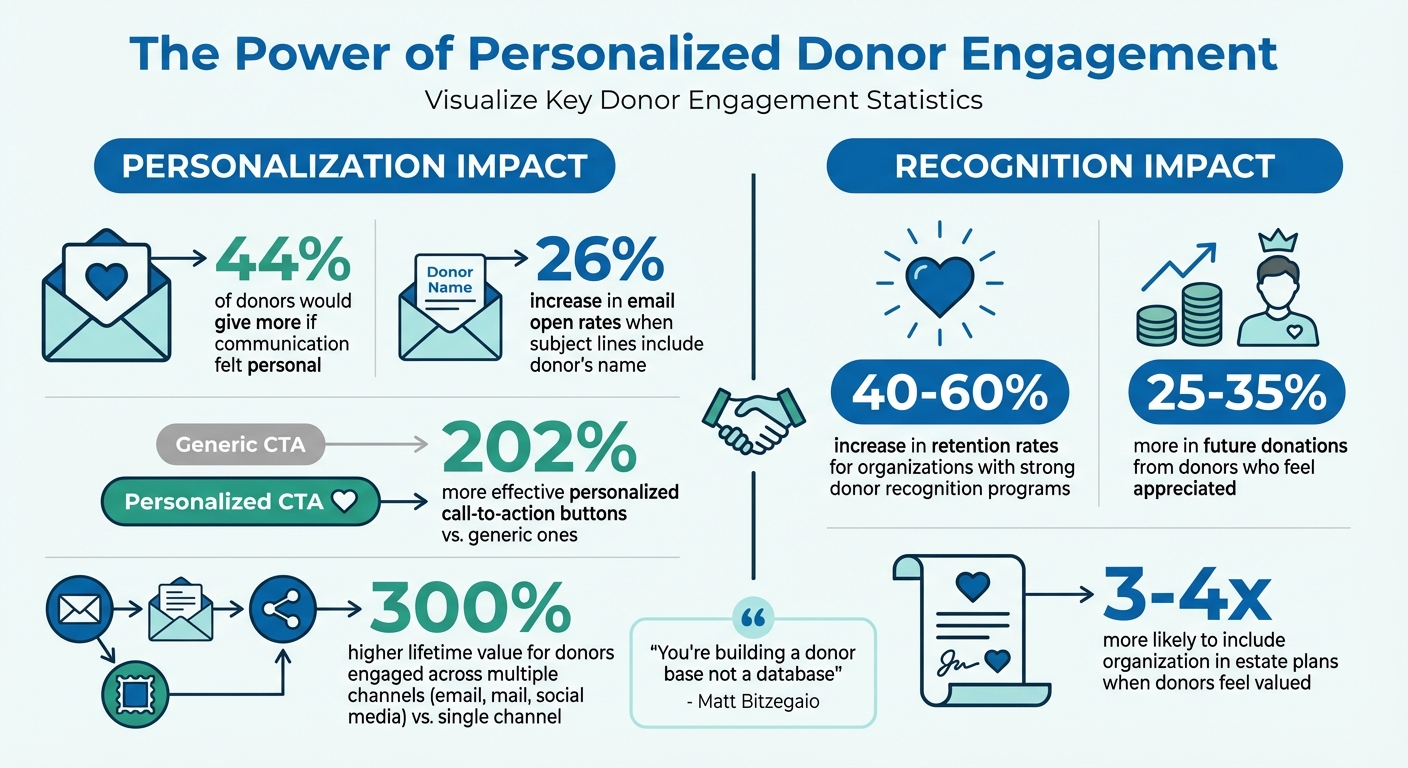
Donor Engagement Statistics: Impact of Personalization and Recognition
Generic emails just don’t cut it. When sponsors receive messages that feel personal - emphasizing their unique role as a key part of the sponsorship journey - they engage differently. In fact, research shows that 44% of donors would give more if the communication felt personal. That’s nearly half of your donor base waiting to feel recognized.
But personalization is more than just adding a first name. For instance, email subject lines that include the donor’s name can boost open rates by 26%, and personalized call-to-action buttons are 202% more effective than generic ones. Go further by referencing the specific child a sponsor supports, acknowledging their past contributions, and sharing updates that matter to them.
As Matt Bitzegaio from HelpYouSponsor says: "You're building a donor base not a database".
Every interaction should remind sponsors that they are partners in a child’s journey - not just a line item.
Customized Messages and Updates
The best updates do more than provide generic progress reports. They include the child’s name, photos, and specific milestones - like academic achievements or celebrations - that clearly show the sponsor’s impact. Use tools like dynamic content and merge fields to automatically include personalized details. Create opportunities for two-way interactions, such as letter exchanges, video messages, or virtual meet-and-greets.
Behavioral triggers can also make your communication more timely and relevant. For example, send messages triggered by actions like donations, visits to a volunteer page, or milestone achievements. Sponsors who engage across multiple channels - email, mail, and social media - have a 300% higher lifetime value than those reached through a single channel. Mix up your methods while keeping the message personal and consistent.
These tailored updates naturally pave the way for sharing powerful stories that highlight the sponsor’s contributions.
Sharing Impact Stories
While numbers show the results, stories explain why they matter. Position the donor as the hero whose generosity makes meaningful change possible. For instance, instead of saying, "Our organization helped Maria learn to read", say, "Because of your support, Maria read her first book cover-to-cover last month." This approach directly ties the donor to the child’s progress, sparking empathy and reinforcing the value of their support.
To make this easier, create a “story bank” to collect quick notes from program staff about impactful moments or milestones they witness. Each month, ask frontline workers to share one specific example of change. Use a simple three-part formula: highlight one person’s experience, one concrete result, and one clear connection to the donor. Keep the stories concise, genuine, and always ensure you have explicit permission from families before sharing.
These stories not only inspire but also strengthen the bond between donors and the children they support.
Building Trust Through Regular Updates and Reporting
Transparency lays the groundwork for lasting connections with donors. While personalized communication helps create emotional bonds, transparency strengthens those connections by showcasing accountability. When donors can see exactly how their contributions are used and track the progress of the children they sponsor, they feel more invested. This shift transforms them from occasional contributors into long-term partners. For instance, World Vision excels at this by offering quarterly updates on individual child progress, biannual community updates, and annual financial summaries through personalized online dashboards. This approach turns abstract donations into visible, meaningful outcomes. Similarly, charity: water has achieved an impressive 75% donor retention rate by using digital tools to share GPS coordinates and photos of completed water projects. During the COVID-19 pandemic, Children International maintained strong donor engagement by providing updates focused on health improvements and educational achievements of sponsored children.
Progress Reports on Sponsored Children
Striking the right balance is key - quarterly or biannual updates ensure sponsors stay informed without feeling overwhelmed. Each update should focus on specific, measurable outcomes, such as better grades, health improvements, or personal milestones like learning a new skill or winning an award. Including vivid visuals, like photos or charts, can make the updates more engaging and emotionally resonant than numbers alone.
Details matter. Instead of broadly stating that a child is "doing well", dive into specifics. For example, share something like: "Maria improved her math grade from a C to an A- this semester and joined the advanced reading group." These targeted updates make the child’s progress more relatable and impactful. To further enhance engagement, consider implementing a simple online dashboard where sponsors can track milestones over time, allowing them to see the tangible results of their ongoing support.
Clear Reporting on Donation Usage
In addition to progress updates, transparent financial reporting is vital to reassure donors about the impact of their contributions. Donors want to know their money is making a difference, not getting lost in administrative costs. By clearly outlining how funds are allocated - whether for education, nutrition, healthcare, or other needs - you build trust and confidence. Honesty about challenges alongside successes can further strengthen this bond.
Provide a clear breakdown to connect contributions to outcomes. For example: "Your $50 monthly sponsorship supports $20 for school supplies and tutoring, $15 for nutritious meals, $10 for healthcare, and $5 for program administration." This level of detail demonstrates accountability and encourages donors to maintain or even increase their support. By implementing these effective nonprofit sponsorship programs for regular, transparent reporting, organizations can deepen donor trust and foster lasting partnerships.
Using HelpYouSponsor to Improve Donor Engagement
HelpYouSponsor takes donor engagement to the next level by simplifying how you manage relationships and stay connected with sponsors. As your sponsorship program grows, keeping up with donor interactions can become a huge challenge. HelpYouSponsor steps in with tools designed to streamline these connections, keeping sponsors engaged without adding to your workload. The platform offers flexible pricing options: it's free for up to 10 commitments, $50/month for up to 63 commitments, and $0.80 per commitment for larger programs.
Donor Management and Automated Communication
With HelpYouSponsor, managing sponsor information becomes a breeze. Instead of juggling spreadsheets or databases, all details are stored in one centralized system. Automated thank-you messages are sent out the moment a donation is made, saving you time while ensuring every donor feels appreciated. This consistency in communication allows you to focus on building more meaningful relationships.
The platform also goes beyond basic automation. You can share personal touches like photos, videos, or drawings from sponsored children. These heartfelt updates turn routine communication into something special, strengthening the emotional connection between sponsors and the children they support. These automated features help maintain and deepen these bonds over time.
Website Integration and Donation Tracking
HelpYouSponsor integrates directly with your website, making it easy for visitors to explore sponsorship opportunities and donate without hassle. Its compatibility with various payment gateways ensures a smooth transaction process, reducing the chances of donors abandoning their contributions.
Donors also gain access to personalized online accounts, where they can check their giving history, update preferences, and learn more about their sponsored children whenever they like. Transparent reporting tools provide a clear breakdown of how donations are used. Sponsors can log in anytime to see exactly where their money is going, creating trust through ongoing visibility into fund allocation.
Engaging Donors Through Virtual Events and Recognition
Staying connected with donors goes beyond updates and automated messages. Virtual events and thoughtful recognition efforts can deepen relationships, creating a sense of community that extends past individual contributions. When donors interact with each other, program leaders, and the children they support, it fosters a shared mission. These Virtual efforts, combined with effective fundraising strategies and honest reporting, help transform one-time donors into long-term advocates.
Virtual Meet-and-Greets and Webinars
Online events give donors a chance to see their impact firsthand - without the hassle of travel. These events can feature video messages from sponsored children, live Q&A sessions with field staff, or webinars where program directors share on-the-ground updates. The key is to make these events interactive, not just one-sided presentations. Live Q&A sessions, for example, not only clarify the program's progress but also bring donors together under a common purpose.
Encouraging peer-to-peer interaction can be powerful, too. Having experienced donors share their sponsorship journeys - like the moment they received their first letter from a sponsored child - can inspire newer supporters and remind everyone of the difference their contributions make.
Donor Recognition Programs
Interactive events are just one piece of the puzzle. Recognizing donors in a meaningful way strengthens their connection to the cause. Organizations with strong donor recognition efforts see retention rates increase by 40% to 60% compared to those with minimal recognition. Plus, donors who feel appreciated tend to give 25% to 35% more in future donations and are 3 to 4 times more likely to include the organization in their estate plans.
Timeliness and personalization are key. Send automated receipts right after a donation, follow up with a personal message within 24 to 48 hours, and provide formal recognition within 30 days. During virtual events, consider calling out donors celebrating milestones or anniversaries - but always ensure they’ve opted in to maintain privacy. Instead of generic thank-you messages, share real-life stories and photos that show the direct impact of their support. These personal touches make donors feel like an integral part of the mission.
Segmenting Donors and Scaling Engagement Efforts
Not all donors are the same - a first-time $25 contributor has different motivations and expectations than a long-term supporter who’s been giving for years. Treating everyone the same risks wasting resources and missing chances to build stronger connections. By segmenting donors, you can tailor your communication to match their level of commitment, creating more meaningful interactions. This approach aligns perfectly with the personalized engagement strategies mentioned earlier.
Segmenting Donors by Behavior and Giving History
Using RFMT analysis (Recency, Frequency, Monetary value, and Timing) can help you uncover patterns in donor behavior. This technique highlights key details like how recently someone donated, how often they give, the size of their typical contribution, and whether their donations are tied to specific events or campaigns.
For instance, a donor who gives $50 every December for three years is likely to respond well to year-end appeals. On the other hand, someone who made a one-time $500 gift during a major campaign might need a completely different follow-up strategy.
Dynamic segmentation takes things a step further by updating donor profiles in real-time based on their actions. For example, if a donor visits your volunteer page repeatedly or abandons a donation form, their profile automatically adjusts, allowing you to send targeted communications that reflect their current interests. Regularly auditing your data ensures that your outreach remains accurate and relevant.
3-3-3 Framework for Engagement
Once you’ve segmented your donors, the 3-3-3 framework helps you prioritize and streamline your engagement efforts. This model divides your donor base into three tiers: high-touch, smart-touch, and scale-touch.
- High-touch: Focuses on the top 150 donors - those with the highest lifetime value or long-term commitment. These individuals receive personal outreach, such as phone calls, handwritten notes, or one-on-one meetings.
- Smart-touch: Targets mid-level donors who give regularly. For this group, you can use automated communication journeys with dynamic content, like updates about the impact of their contributions, to make interactions feel personal.
- Scale-touch: Designed for the larger donor base, this tier relies on automated tools for routine communications, such as receipts, welcome series, and newsletters.
This tiered system ensures that your most valuable donors get the attention they deserve, while automation helps manage the broader outreach efficiently.
As Matt Bitzegaio from HelpYouSponsor puts it, "Without human relationships at the core, automation does not help to scale fundraising".
It’s also worth noting that donors who engage with your organization across multiple channels have a lifetime value that’s 300% higher than those who stick to just one. This highlights the importance of a well-rounded, multi-channel approach to donor engagement.
Conclusion
Creating stronger sponsorship communities hinges on treating donors as genuine partners in your mission. By focusing on personalized communication, honest reporting, and regular engagement, you can establish trust and encourage long-term support. When donors clearly see the impact of their contributions - through updates, compelling stories, and detailed financial transparency - they’re far more likely to stay dedicated.
The strategies outlined here work together to form a well-rounded approach to donor engagement. Providing tailored updates and hosting meaningful events help reinforce donor loyalty, while segmenting your donor base ensures that everyone gets the right level of attention. For instance, highly engaged donors may benefit from personal outreach, while broader audiences can be effectively reached through automated communications.
HelpYouSponsor simplifies donor management by centralizing your data, automating follow-ups, and solving engagement challenges. Its built-in messaging tools and website integration make maintaining regular contact easier, so your team can focus on building stronger relationships. These tools showcase how an organized approach not only eases the workload but also strengthens the connection between you and your donor community.
Using multiple channels - email, virtual events, social media, and direct communication - amplifies donor engagement. A mix of outreach methods ensures you can connect with donors wherever they are, fostering a vibrant and supportive sponsorship network.
Start small by implementing one or two strategies, track their results, and scale up as you see success.
FAQs
How often should sponsors get child updates?
Sponsors usually get updates about their sponsored child twice a year. These updates, shared through letters or messages, keep the connection alive and provide insight into the child’s progress, fostering a sense of involvement and trust.
What can we personalize beyond a donor’s name?
To connect with donors on a deeper level, go beyond just mentioning their name. Highlight how their contributions have made a difference - share stories that showcase the impact of their support. Keep them in the loop with updates about the outcomes their donations have helped achieve. Tailor your communication to reflect their giving history and preferences. These thoughtful touches reinforce the relationship and demonstrate the real-world results of their generosity.
How do we segment donors without extra work?
You can organize donors effectively by leveraging the data you already have and using automation tools to streamline the process. Start by grouping supporters based on key characteristics such as their donation history, demographic details, or how actively they engage with your organization.
Many modern platforms can handle tasks like monitoring donation trends and supporter behaviors automatically, reducing the need for manual work. By incorporating donor tiers and engagement metrics, you can fine-tune your segmentation even further. This approach helps you reach the right groups with tailored messages while saving valuable time.