
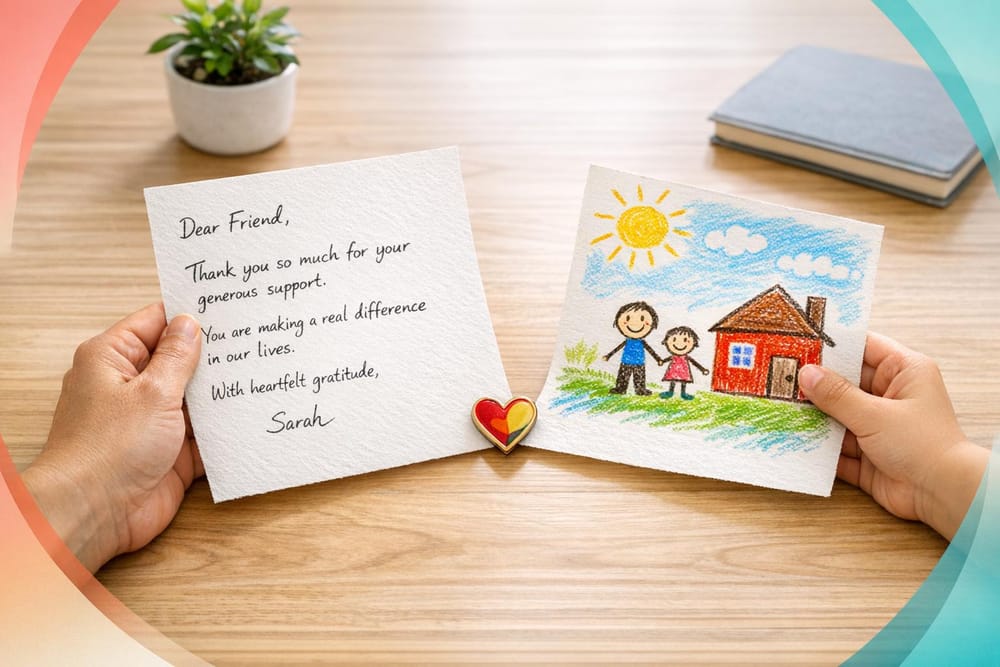
Donor-Centered Stories vs. Child-Centric Narratives
Gratona
Which storytelling approach works best for nonprofit fundraising? This article breaks down two strategies: donor-centered stories and child-centric narratives.
- Donor-Centered Stories: Focus on the donor as the hero. These stories emphasize the donor's impact, using phrases like, “Because of you, this child found hope.” This approach appeals to donors’ values and sense of purpose, making them feel integral to the change.
- Child-Centric Narratives: Focus on the child as the main character. These stories highlight the child’s journey, struggles, and progress, with the donor positioned as a supporter or ally.
Both methods have strengths and challenges, much like the choice between storytelling vs. data in fundraising. Donor-centered stories build long-term donor loyalty but risk feeling transactional. Child-centric narratives create emotional connections but must avoid exploiting the child’s story. The best campaigns often combine both approaches, celebrating donor contributions while keeping the child’s journey central.
Quick Comparison
| Aspect | Donor-Centered Stories | Child-Centric Narratives |
|---|---|---|
| Focus | Donor’s role in creating change | Child’s journey and transformation |
| Emotional Appeal | Positive reinforcement, donor pride | Empathy, connection to the child |
| Donor Motivation | Personal values, sense of impact | Desire to help a specific child |
| Ethical Risks | Overemphasizing donor’s role | Exploiting or oversharing details |
| Best Use | Retaining and engaging donors | Attracting new donors, awareness campaigns |
Key takeaway: Tailor your storytelling approach to your audience and campaign goals. Combine both methods for a balanced narrative that respects the child’s dignity while celebrating donor impact.
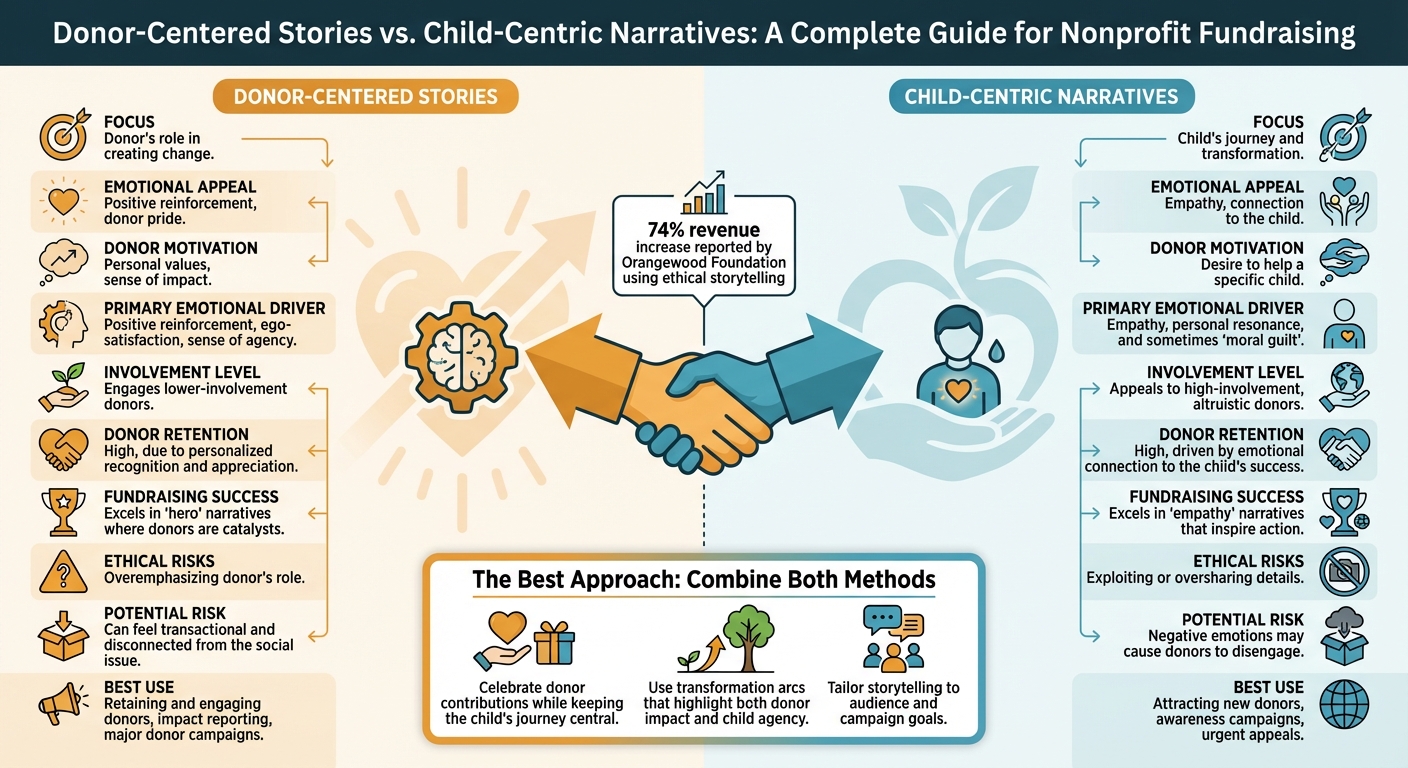
Donor-Centered vs Child-Centric Storytelling Comparison for Nonprofits
Episode 127: How to Tell Donor Stories That Inspire Action (Not Just Emotion)
What Are Donor-Centered Stories?
Let’s take a closer look at donor-centered stories and why they matter.
Donor-centered stories put the spotlight on the donor's role. These narratives emphasize what donors have made possible, shifting the focus from "our program helped" to "because of you, this child found hope." In this framework, the donor becomes the hero - the driving force behind meaningful change.
Claire Axelrad, Founder of Clairification, explains this approach beautifully:
"The most effective fundraising stories hold up a mirror to the donor's inner world. They help people recognize themselves - their values, motivations, and sense of what matters - in the change you're inviting them to make".
The goal? To help donors see their giving as an extension of their identity, encouraging deeper and lasting involvement.
Core Elements of Donor-Centered Stories
Great donor-centered stories follow a specific formula. They start by presenting a problem that resonates - something the donor can connect with emotionally. Then, they outline a solution that feels achievable. Finally, they demonstrate how the donor’s contribution directly brought about change.
These stories also follow a clear narrative arc: introduce a relatable protagonist, describe their struggle, show how they overcame it, and highlight the donor's role in their transformation. For example, instead of saying, "Jamal received stable housing through our program", a donor-centered story would frame it as, "Because of your support, Jamal found his footing".
Importantly, these stories avoid exploiting suffering for pity. Instead, they focus on hope and the donor’s ability to create solutions. Some organizations even tailor their messaging to align with different personality types - emphasizing dignity and efficiency for pragmatic donors or compassion and connection for those who value relationships.
This thoughtful structure lays the groundwork for tools that can amplify the impact of these stories.
How HelpYouSponsor Supports Donor-Centered Approaches
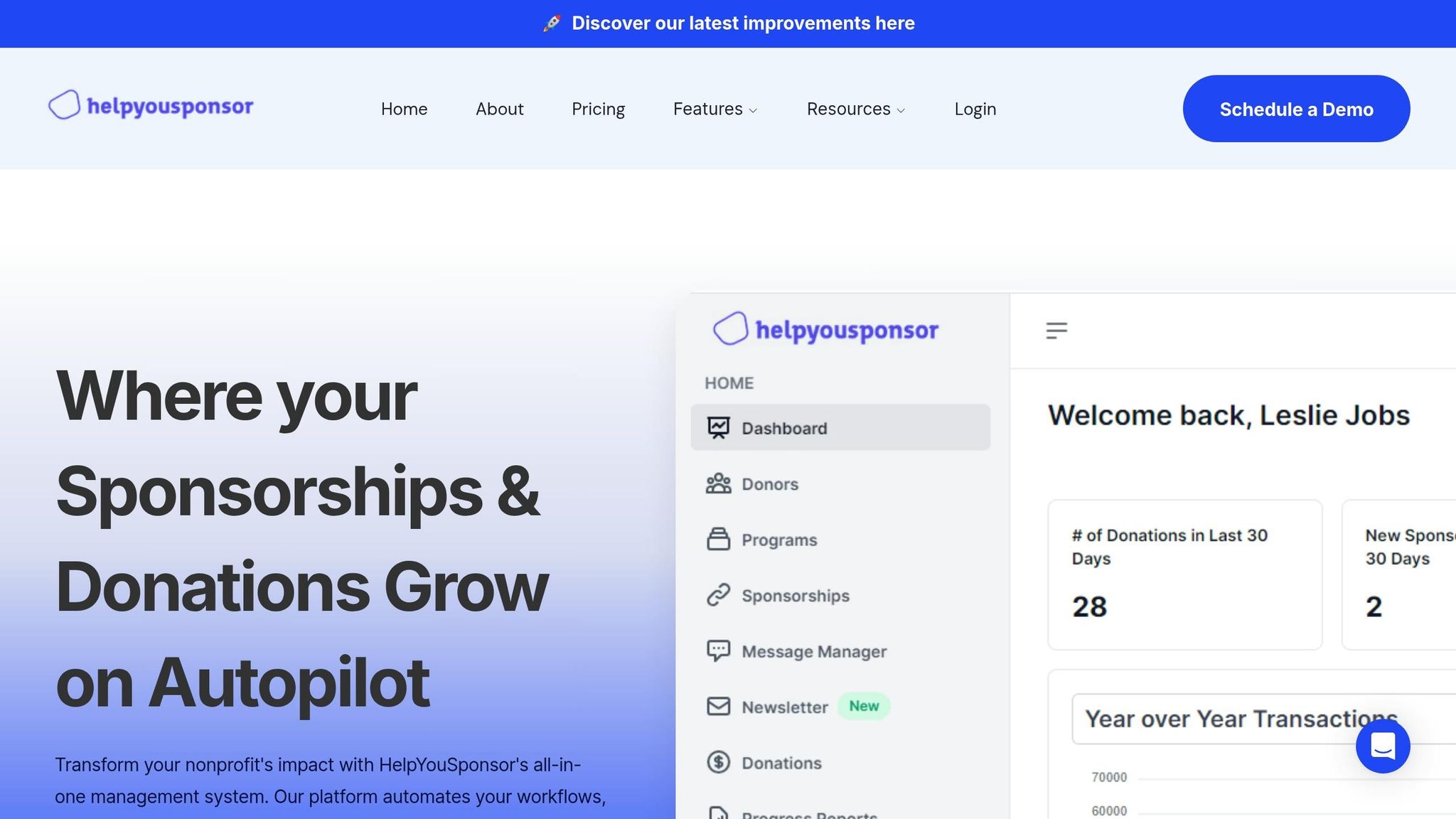
HelpYouSponsor offers tools to make donor-centered storytelling easier and more effective. For instance, its personalized automated donor messages ensure donors are promptly acknowledged, reinforcing their importance and partnership. Personalized updates - like quarterly reports, photos, or video messages - help maintain a strong connection with donors.
The platform also manages donor and recipient data, enabling organizations to send tailored, meaningful communications instead of generic mass emails. Features like letter exchanges and video messages strengthen the relationship between donors and beneficiaries, turning financial contributions into personal connections. By taking care of logistical challenges, HelpYouSponsor allows teams to focus on crafting stories that truly celebrate donors.
Next, we’ll explore how child-centered narratives offer another powerful way to foster engagement.
What Are Child-Centric Narratives?
Unlike donor-centered stories that spotlight the donor's contributions, child-centric narratives put the child front and center. These stories focus on the child's life, challenges, strengths, and growth, making them the main character in their own journey.
Isauro M. Escamilla, a preschool teacher and doctoral student, explains this approach as portraying children as curious, capable, and playful learners, rather than as passive recipients of aid. The idea is to foster empathy by inviting donors into the child’s world - exploring their family background, cultural roots, personal struggles, and evolving identity. Sharing a child’s transformative journey fulfills the emotional connection donors often seek.
These narratives are built on genuine evidence like photos, written observations, and examples of the child’s work or words. For instance, in May 2017, a teacher at Las Americas Early Education School shared Zahid’s story. “Waiting for Dad on this Side of the Border” used maps and Zahid’s own words to highlight his father’s detention and its impact on his life. Another piece, “Under the Same Sun,” captured his emotions through acrylic painting, a medium he initially avoided. This approach not only allowed Zahid’s family to share their perspectives but also helped teachers support his emotional and academic growth.
Child-centric stories aim to do more than inform - they connect donors to the child’s personal journey.
Main Components of Child-Centric Narratives
Strong child-centric stories weave together personal details, progress updates, and transparency. Instead of focusing on what a child lacks (a "deficit perspective"), they highlight strengths, talents, and interests. Regular updates on milestones - like health improvements, academic achievements, or personal breakthroughs - report child sponsorship outcomes to show the real, tangible impact of support. For example, rather than stating “literacy improved,” share a specific moment when a child’s ability to read changed their life.
These stories are most compelling when they include multiple viewpoints. Incorporating the child’s own words, observations from teachers, and insights from family members creates a fuller picture. Writing in the first person or directly to the child can also make the narrative feel more personal and engaging.
Balancing Emotional Appeal with Ethics
While emotional detail is key, it’s just as important to approach these stories with ethical care. A major challenge in child-centric storytelling is avoiding exploitation. Ethical narratives should evoke emotion while also informing, advocating, and empowering - never exploiting. Stories that focus solely on suffering risk reducing children to their hardships, which can alienate donors rather than inspire them to help.
In April 2025, the Orangewood Foundation shared the results of adopting an "Ethical Storytelling" model. By moving away from stories that emphasized only the most painful aspects of youths' lives and instead highlighting their strengths with consent and care, the foundation saw a 74% revenue increase during their Spring and Year-End campaigns.
Ethical storytelling requires ongoing consent - not just a one-time signed form, but a continuous dialogue with the child and their family about how the story will be used, with the ability to opt out at any time. Protect privacy by focusing on the child’s transformation and agency rather than solely their struggles. Before publishing, ask: How would this child feel reading their own story? Would they feel proud of their journey or reduced to their hardships?. Additionally, provide follow-up support to help children and families process the experience of sharing their story.
Strengths and Weaknesses Compared
Each storytelling approach has its own set of advantages and challenges. Donor-centered stories focus on making supporters feel appreciated and integral to the mission. This approach works particularly well with donors who are motivated by personal satisfaction, as it provides positive reinforcement. However, such narratives can sometimes feel transactional, lacking a deeper connection to the broader social issue.
On the other hand, child-centric narratives create strong emotional bonds by immersing donors in the child's story. This technique, known as narrative transportation, helps donors align their attitudes and take action. These stories are especially effective with donors who are highly involved and motivated by altruism. The downside is that they often evoke emotions like sadness or guilt, which can lead to affective resistance and decrease the donor's immediate willingness to help. As Moore and colleagues point out:
"Narratives raising awareness of broader societal problems are more likely to evoke negative emotions that can reduce willingness to help".
The key difference lies in the psychological drivers behind each approach. Donor-centered stories emphasize the donor's role, while child-centric narratives encourage donors to empathize by stepping into the child's perspective. Interestingly, while negative emotions such as moral guilt can be uncomfortable, they do have the potential to inspire social behaviors like volunteering or donating.
Here’s a side-by-side comparison of these narrative styles:
Comparison Table
| Aspect | Donor-Centered Stories | Child-Centric Narratives |
|---|---|---|
| Primary Emotional Driver | Positive reinforcement, ego-satisfaction, sense of agency | Empathy, personal resonance, and sometimes "moral guilt" |
| Donor Motivation | Value-driven: focuses on cost-benefit or personal values | Cause-driven: focuses on the child's specific needs |
| Involvement Level | Engages lower-involvement donors | Appeals to high-involvement, altruistic donors |
| Psychological Mechanism | Highlights the donor’s impact | Immerses donors in the child’s story |
| Donor Retention | High, due to personalized recognition and appreciation as part of a donor management strategy | High, driven by emotional connection to the child’s success |
| Fundraising Success | Excels in "hero" narratives where donors are catalysts | Excels in "empathy" narratives that inspire action |
| Ethical Considerations | Risks overemphasizing the donor's role | Raises concerns about balancing donor engagement and child dignity |
| Potential Risk | Can feel transactional and disconnected from the social issue | Negative emotions may cause donors to disengage |
Choosing the Right Approach for Your Campaign
Deciding on the best narrative strategy depends on your campaign goals, the audience you’re addressing, and the values your organization stands for. Let’s break down when to use donor-centered stories versus child-centric narratives.
When to Use Donor-Centered Stories
Donor-centered stories shine when your objective is to strengthen long-term donor relationships. For major and mid-level donors, these narratives highlight how their contributions have directly transformed lives, positioning them as the heroes of the story. This approach fosters loyalty by showing donors the tangible impact of their generosity.
These stories are particularly effective for impact reporting and recognition campaigns. Major donors often want to see clear links between their gifts and real-world outcomes. Instead of relying solely on financial data, use storytelling formats like short videos, photo essays, or audio messages from beneficiaries to create emotional connections. These updates make the impact feel personal and meaningful.
Donor-centered storytelling also works well when tailoring appeals to align with each donor’s values. By considering personality traits like Openness, Conscientiousness, and Agreeableness, you can craft messages that resonate on a deeper emotional level. Kevin Shulman from Agitator-DonorVoice puts it this way:
"The fundraising story is a mirror, not an exhibit".
Reflecting the donor’s identity in your messaging makes giving feel like a natural expression of who they are. However, for campaigns aimed at acquiring new donors, a different approach may be more effective.
When to Use Child-Centric Narratives
Child-centric narratives are ideal for attracting new donors and raising awareness. These stories tap into empathy by focusing on one child’s journey, creating a strong emotional connection. Research shows that single, relatable stories can inspire significantly higher donations compared to presenting statistics alone. This is known as the "Identifiable Victim Effect."
This approach works best for urgent appeals and awareness campaigns that require immediate action. A simple yet compelling structure - introducing a relatable protagonist, describing their struggle, showing their transformation, and linking the outcome to the donor - can cut through the noise and motivate support. As Oregon State University PACE emphasizes:
"Facts tell. Stories sell".
However, it’s important to avoid overused tropes that might feel exploitative or lead to emotional fatigue. Instead, focus on the child’s journey and agency to keep the narrative engaging and authentic.
For organizations prioritizing equity and justice, child-centric narratives can position donors as allies or supporters rather than centering privilege. As Kindred Purpose notes:
"Your fundraising approach is your brand. It tells the world what you value, and who you value".
Using HelpYouSponsor to Execute Your Strategy
Whether you focus on donor-centered or child-centric storytelling, HelpYouSponsor makes it easier to bring your strategy to life and keep your audience engaged.
For donor-centered campaigns, the platform allows you to send personalized emails that connect a child’s progress directly to the donor’s contribution. Its reporting and analytics tools provide transparent breakdowns of how donations are used, reinforcing trust and accountability.
For child-centric campaigns, HelpYouSponsor’s recipient management system lets you track and share updates on a child’s milestones, education, and health through photos, videos, and drawings. These multimedia updates create stronger emotional bonds than text alone. Features like letter exchanges and video messaging also help sponsors connect personally with the children they support.
The platform’s dashboard provides a centralized view to monitor donor engagement and track campaign performance. This helps you fine-tune your strategy, ensuring that your narrative resonates with different audience segments. Whether you’re sending quarterly updates or crafting a heartfelt appeal, you can balance the focus between the child’s journey and the donor’s role in making it all possible.
Combining Both Storytelling Approaches
You don’t have to pick sides when it comes to donor-centered or child-focused storytelling. The best campaigns often blend these methods, creating narratives that celebrate the donor's role while keeping the child's journey at the forefront. This hybrid approach acknowledges donors' contributions while focusing on the real impact felt by the child or community being served.
Blending Donor and Child Narratives
One effective way to combine these storytelling styles is through a transformation arc. Start by introducing a challenge the child is facing, then highlight how the donor’s involvement became the turning point toward a meaningful solution. This approach keeps the donor engaged while ensuring the child remains an active participant in the story, not just a passive recipient.
To make this even more impactful, pair donor contributions with updates on the child’s progress. For instance, instead of simply saying, "Maria graduated from elementary school", you could say, "Thanks to your support, Maria graduated from elementary school with honors and is now pursuing secondary education." This not only acknowledges the donor’s role but also emphasizes the child’s achievements and growth.
Storytelling doesn’t end with the initial appeal. Impact reporting and tracking are just as crucial and can be incredibly effective when it connects personal stories to measurable outcomes. While major donors may look at financial reports, the emotional desire to make a difference is often what drives generosity. Including authentic visuals and real-time updates can strengthen trust and engagement. Research even shows that stories are remembered up to 22 times more than standalone facts, making it essential to weave data into compelling narratives.
To execute this blended approach effectively, leveraging technology is key.
Using Technology for Combined Storytelling
The right tools can make managing effective nonprofit sponsorship programs much easier. Platforms like HelpYouSponsor streamline this process by centralizing donor and recipient data. HelpYouSponsor simplifies storytelling by integrating Program Management, Donor Management, and Recipient Management into one system. This allows organizations to directly link donor contributions to specific outcomes in a child’s life.
With its communication tools, you can schedule regular updates - quarterly or bi-annually - detailing a child’s educational, health, and personal milestones. Personalized emails can share these achievements while tying them directly to the donor’s support. The platform also enables two-way interactions, such as letter exchanges and video messages, fostering deeper emotional connections between donors and children.
This approach reflects the idea that, as Kevin Shulman of Agitator-DonorVoice puts it, "the fundraising story is a mirror, not an exhibit". By showing donors how their contributions make a direct and meaningful impact, you create a narrative that resonates on both emotional and ethical levels.
Conclusion: Finding the Right Narrative Balance
There’s no one-size-fits-all approach to storytelling in campaigns. The best strategy depends on your organization’s mission, your donors’ values, and your campaign objectives. As Claire Axelrad from Clairification explains:
"When that reflection feels true, giving becomes a natural expression of who the donor already is".
This highlights the importance of understanding your audience deeply enough to create stories that resonate with their identity while respecting the dignity and journey of the children you serve. Striking this balance allows you to celebrate donor contributions while honoring the child’s experiences.
You don’t have to choose one method exclusively. Combining both approaches creates stronger narratives - ones that showcase donor impact while keeping the child’s story at the heart. Whether your focus is on donor achievements or child transformation, storytelling should play a role in both your donor cultivation efforts and your impact reporting.
To make these blended narratives easier to manage, platforms like HelpYouSponsor offer practical tools. Technology simplifies these strategies by centralizing donor and recipient data, enabling personalized updates, and fostering direct communication between sponsors and children. Features like milestone tracking, multimedia sharing, and transparent reporting ensure you can maintain meaningful connections while handling the operational needs of a sponsorship program.
As discussed earlier, balanced storytelling strengthens both donor trust and child dignity. Finding the right mix builds trust, fosters lasting relationships, and drives impactful change. By tailoring your storytelling to match donor personalities - whether they value efficiency and dignity or kindness and connection - you can deepen engagement. With donor retention rates currently hovering between 40% and 45%, thoughtful and personalized storytelling is crucial for long-term growth.
Keep experimenting, listening to donor feedback, and refining your narratives. Whether you lean toward donor-focused or child-centered stories, authenticity and respect should always guide your approach.
FAQs
How do I choose the right story style for my campaign?
Choosing the right storytelling approach hinges on your campaign goals and the emotional resonance you aim to achieve. Donor-centered stories highlight the difference donors make, expressing gratitude and motivating ongoing support. On the other hand, child-centric narratives bring individual children's experiences to the forefront, sparking empathy and inspiring action. Think about your audience and objectives - sometimes blending both styles can create a powerful and balanced message.
How can we share a child’s story ethically and safely?
To share a child's story in a way that is both ethical and safe, it’s crucial to put their dignity, privacy, and autonomy first. Always seek informed consent, ensuring they understand how their story will be used. Represent their voice honestly, steering clear of harmful stereotypes or narratives that diminish their humanity. Protect their personal information by using techniques like data masking and limiting access to sensitive details. Ethical storytelling isn't just about transparency - it's about safeguarding the child’s well-being, respecting their rights, and presenting them as individuals with strength and agency, rather than as subjects needing rescue.
What’s the best way to blend donor and child storytelling?
To effectively combine donor and child storytelling, highlight how donor contributions directly shape children's lives while staying true to their personal stories. Center your narrative on empathy, human connection, and a community-focused approach. This method not only engages donors but also respects the dignity and individuality of the children. By balancing both perspectives, you create stories that feel genuine and foster a sense of shared purpose and emotional connection.