
Using Photos Ethically in Nonprofit Stories
Gratona
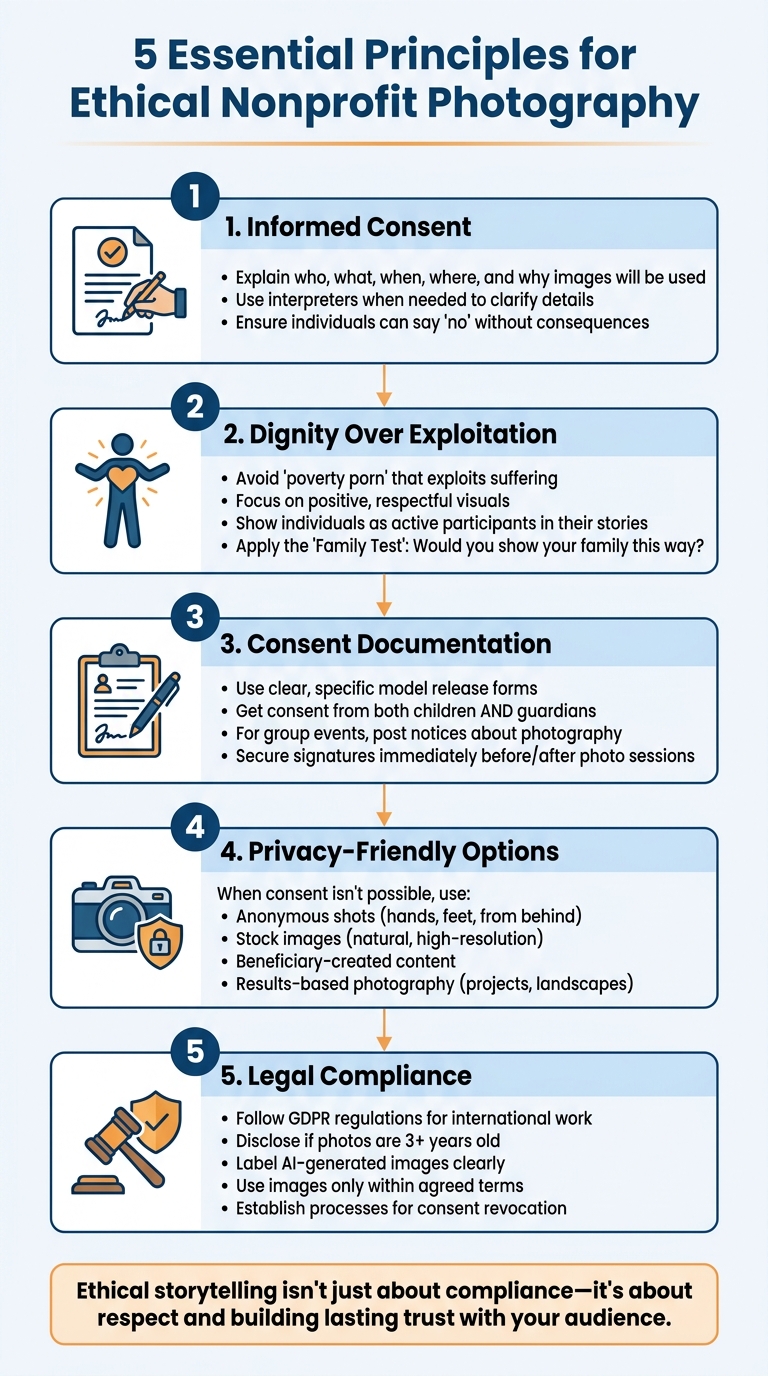
Photographs are powerful tools for nonprofits, especially in child sponsorship programs. But with great power comes great responsibility. Ethical photo use means safeguarding the dignity and rights of individuals while maintaining trust with donors. Here's how nonprofits can ensure ethical practices:
- Informed Consent: Always explain how images will be used, and ensure individuals (or guardians for children) can say "no" without fear of consequences. Use interpreters when needed to clarify details.
- Dignity Over Exploitation: Avoid using "poverty porn" or images that exploit suffering. Instead, focus on positive, respectful visuals that show individuals as active participants in their own stories.
- Consent Documentation: Use clear, specific model release forms to document consent. For group events, post notices to inform attendees about potential photography.
- Privacy-Friendly Options: When consent isn't possible, consider anonymous shots, stock images, or beneficiary-created content to protect privacy.
- Legal Compliance: Follow regulations like GDPR and ensure images are used within agreed terms. Also, disclose if photos are outdated or AI-generated. Nonprofits can also leverage ChatGPT for operations to streamline the creation of these ethical guidelines and consent forms.
Ethical storytelling isn't just about compliance - it's about respect. By prioritizing informed consent, transparency, and dignity, nonprofits can build lasting trust with their audiences.
5 Essential Principles for Ethical Nonprofit Photography
Ethical Storytelling in Nonprofits: Balancing Impact and Dignity with Diana Farias Heinrich
Getting Informed Consent for Photos
A clear and respectful consent process is key to maintaining the trust and dignity of those involved in nonprofit fundraising. It not only helps protect your organization’s reputation but also shows respect for the individuals whose stories and images you share.
What Informed Consent Means
Informed consent involves explaining the who, what, when, where, and why of how an image will be used. It's important to emphasize that agreeing to be photographed does not automatically mean the image can be shared publicly - whether on social media, in fundraising messages, or on your website.
This process should feel more like an open, honest conversation than a formality. People need to understand any potential risks - physical, emotional, psychological, or reputational - that could come with publishing their image. For nonprofits working across language barriers, it’s crucial to use an interpreter who can explain the details in the subject’s native language. Avoid confusing legal jargon that might make the process unclear.
Let’s take a closer look at how this process works when children are involved.
Getting Consent From Children and Guardians
When photographing children, it’s essential to get consent from both the child and their parent or guardian. While children may not fully understand the long-term effects of sharing their image, asking for their agreement shows respect for their personal autonomy.
In some communities, power dynamics can complicate this process. Families who rely on your services might worry that refusing consent could affect their access to support. To address this, make it clear that saying no will not impact their relationship with your organization. A local fixer can help navigate cultural and language barriers, creating a more trusting and transparent environment.
Using Model Release Forms to Document Consent
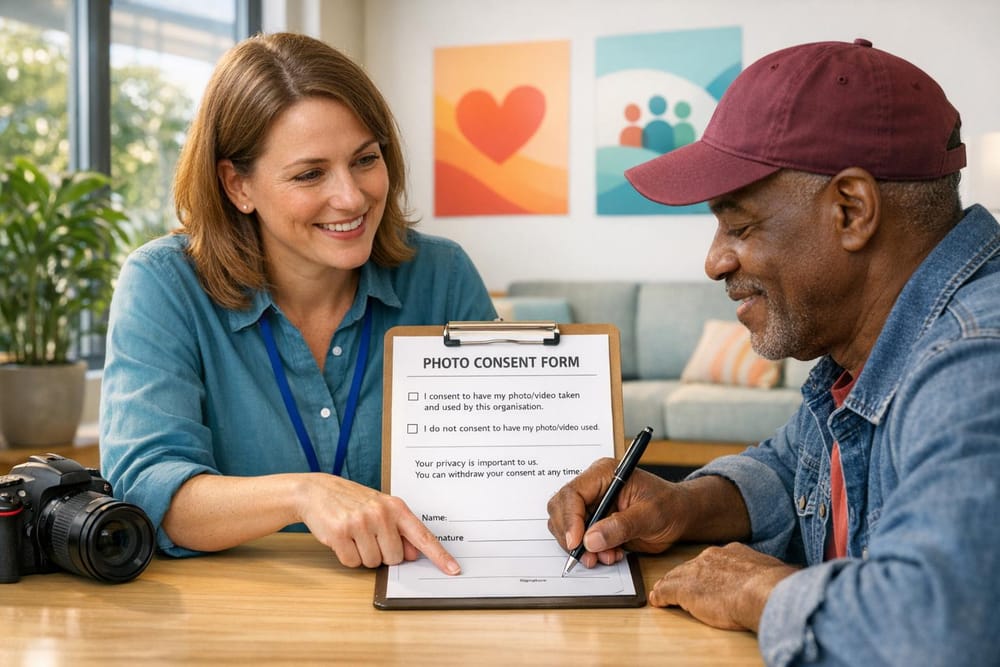
Once you’ve had the consent conversation, a model release form provides formal documentation to back up the verbal agreement. This form should clearly identify the person being photographed (or their guardian) and your organization. It must also specify how the images will be used - avoiding vague terms like "marketing purposes" and instead listing specific platforms or materials.
For anyone under 18, a parent or legal guardian must sign the release form. The form should also outline whether the rights are granted for a limited time or indefinitely and whether you are allowed to edit or alter the images. To avoid confusion, aim to secure signatures immediately before or after the photo session.
If you’re photographing a large event where individual consent isn’t practical, you can use crowd release notices. Posting these at all entrances lets attendees know that photos may be taken for promotional use. This approach ensures transparency while managing the logistics of group settings.
Showing Beneficiaries With Dignity
Once you've secured consent, the next step is to select images that respect and honor the humanity of the people you serve. Moving away from exploitative visuals isn't just ethical - it helps build trust and foster engagement with your community.
Avoiding Harmful Stereotypes
Images of extreme poverty, often referred to as "poverty porn", have been used for years to elicit donations by showcasing trauma - like starving or tearful children. While these images might boost short-term fundraising, they carry significant consequences. They dehumanize individuals and perpetuate stereotypes, undermining the very communities they aim to support.
Such imagery reinforces a sense of paternalism and strips individuals of their agency. A helpful guideline is the "Family Test": Would you feel comfortable if your own family or friends were portrayed in this way?.
To avoid perpetuating stereotypes, use captions that provide context and detail. Additionally, ensure that skin tones remain true to life during post-processing. For instance, referencing the 2011 Nepal Demographic and Health Survey, which reports that 41% of Nepali children under five are short for their age, can help prevent audiences from making sweeping generalizations based on a single image.
With respectful imagery as a foundation, let’s consider how to showcase genuine strength in storytelling.
Showing Strength and Real Stories
Ethical storytelling places the focus on the beneficiaries as active participants in their own progress - not as passive recipients of aid. Choose photos that highlight individuals contributing to their communities or achieving personal milestones. Images with smiles and direct eye contact can create a sense of connection and positivity.
Photographer Laura Elizabeth Pohl, who collaborated with Catholic Relief Services in Nigeria, illustrates this approach beautifully:
"I'm interested in showing the dignity, the hope, and the shared humanity of all people".
During a three-week assignment, Pohl adhered to a strict code of conduct, ensuring every subject had the choice to participate. In one case, a woman requested her face not be shown in a photograph, and her wishes were respected - preserving her dignity while still telling her story.
Treat subjects as collaborators in the storytelling process. Show them their photos immediately after taking them and, when possible, provide printed copies as a gesture of respect and trust. As Marshall Stowell, Former Vice-President of Communications at the Conrad N. Hilton Foundation, explains:
"The goal is not just connecting with an audience but having a greater impact on the work that we're doing. It's evolving the ways audiences relate, and when we follow the lead of the people we serve, then the outcomes will be better".
Photo Options When You Can't Get Consent
There are situations where getting consent for photos just isn’t possible. Whether you’re covering a public event, documenting a crisis, or unable to follow up with the subject, there are still ways to handle this ethically while respecting the dignity of those involved.
Using Location Shots and Anonymous Photos
Anonymous photos are a great way to protect privacy while still capturing the essence of your work. The goal is to ensure that no one in the image can be identified.
Photographer Matt Kloskowski suggests using a 70-200mm lens or repositioning yourself to focus on details - like hands at work, footsteps, or environmental elements - rather than faces. Shooting from behind is another effective technique. The Storytelling for Good Team explains, "sometimes it works well to photograph subjects from behind so that only their activities, and not their faces, can be seen." This method also works when capturing scenes from a service provider’s perspective, such as focusing on a doctor or aid worker while keeping beneficiaries out of direct view.
When photographing in public spaces, pay attention to body language. Avoid capturing individuals who seem uncomfortable. Additionally, consider the context of the image carefully - a photo taken at a specific location, like a clinic, could unintentionally suggest something about a person’s health status.
Using Stock Photos and Beneficiary-Created Content
When direct photography isn’t an option, stock photos and beneficiary-created content can be valuable alternatives. For stock images, steer clear of overly staged or artificial-looking photos. Opt for natural, single-subject settings instead.
Always use the highest resolution available to avoid pixelation. Keep licensing details organized and accessible, as nonprofits have faced legal issues for using images beyond their agreed terms.
Participatory photography is another powerful option. By training community members to document their own lives, you give narrative control to those most connected to the story. As Global Impact Narratives highlights, "training local photographers or using participatory photography projects can shift the narrative control to those most affected by the crisis".
If photos of people aren’t available, consider focusing on results-based photography. This could include images of completed projects, landscapes, or objects that demonstrate impact and support nonprofit sponsorship programs. Cassie Call, Managing Director of Campaign Marketing at Global Impact, puts it perfectly:
"If you don't have a strong, quality photo, it might be best to not use one and increase your design elements in a marketing piece instead".
Sometimes, a thoughtfully designed piece with minimal imagery can tell a more ethical story than using a photo that raises concerns.
Legal and Policy Protections for Photo Use
Getting consent is just the beginning. To safeguard your organization and the people you serve, you need structured systems to manage photo use now and in the future. This involves understanding legal responsibilities and creating internal policies to keep everyone on the same page.
Managing Usage Rights and Future Use
Photo usage laws can be tricky. If your organization operates internationally or works with communities connected to the EU, you must comply with GDPR vs. U.S. data laws. Under GDPR, photos are considered personal data, requiring strict protocols for collection, processing, and storage. In the U.S., some state-level biometric privacy laws now mandate explicit consent before using facial recognition technology on photos.
For nonprofits, there's an added layer of responsibility. According to BBB Standard 15, charities must disclose if photos are more than three years old. As Give.org explains:
"If the story and photo are older than three years, we hope the charity will also accurately represent its age so that donors will not mistakenly believe this is a recent event".
You also need to consider the right of publicity. Using someone's image to suggest an endorsement without their permission can violate this right, which varies by state. When using stock photos, don't assume the provider has cleared all rights for nonprofit purposes. Always confirm that the necessary releases are in place for your specific use.
Additionally, establish a process for individuals to modify or revoke their consent after a photo is published. Not only is this an ethical practice, but it's also becoming a legal obligation. These requirements underscore the need for strong internal policies.
Creating Policies for Photo Review and Storage
To meet these legal and ethical standards, your organization needs clear policies to guide photo practices that align with your broader mission. Start by drafting a detailed written policy that defines the purpose, scope, and procedures for obtaining and managing consent. Established frameworks like the International Guild of Visual Peacemakers' Visual Code can serve as helpful guides for ethical visual communication.
Your policy should also prioritize secure storage. Use encryption and strict access controls to protect the privacy of those featured in your photos. A Digital Asset Management (DAM) system can simplify the storage, retrieval, and tracking of both consent forms and the photos themselves.
Training your staff is equally crucial. Host workshops to ensure everyone understands how to properly obtain consent and address participant concerns. When working with diverse communities, consult local cultural advisors to adapt your consent processes to align with community norms and traditions.
Finally, implement a review process to identify and remove problematic content before it becomes part of your permanent collection. Set clear guidelines for deleting images that perpetuate harmful stereotypes or exploitative narratives. Be transparent about AI-generated images and stock photos by labeling them clearly to maintain trust with your donors. Adding detailed captions to your photos can also help provide the right context and avoid misleading generalizations.
Using Ethical Photos in Sponsorship Stories
When it comes to sponsorship stories, using photos responsibly isn’t just about legality - it’s about building trust. Thoughtful photo choices can deepen connections with donors while respecting the dignity of those featured.
Pairing Photos With Stories
Ethical storytelling means pairing carefully chosen images with narratives that highlight the positive impact of your work. Avoid using photos designed to shock or exploit emotions. Instead, focus on images that celebrate achievements and progress. As Cassie Call, Managing Director of Campaign Marketing at Global Impact, explains:
"The most compelling images convey a complete story. They evoke an emotion or even a question... It leaves the viewer thinking about the stories behind the photo, learning and wanting more, and ultimately finding inspiration to take action."
To create this balance, use a mix of engaging portraits and authentic, everyday moments. Always include captions to provide important context, and collaborate with the individuals in the photos during the creation process. Before publishing, seek feedback from colleagues or your target audience to ensure the images are both respectful and impactful.
Next, let’s look at how technology can help streamline this process.
Using HelpYouSponsor for Photo Management
Managing photos ethically requires a system that keeps track of consent, usage rights, and other details. HelpYouSponsor offers a solution to simplify this process.
This platform helps you organize and monitor photo consent and usage across various sponsorship campaigns. It allows you to document where and how each image can be used and link specific photos to individual sponsorships. By doing so, you maintain clarity and ensure that all photos are current and approved for use.
Conclusion
Using photos ethically is about more than just following guidelines - it’s about respecting the people you serve and fostering authentic trust with donors. By focusing on informed consent, respectful representation, and transparency, you strengthen the bond between your organization’s mission and its audience.
The BBB Standards for Charity Accountability emphasize that all solicitation materials must be accurate and truthful. This includes ensuring images are up-to-date and clearly labeled if they’re older or AI-generated.
The Storytelling for Good Team offers a powerful reminder of this responsibility:
"We must never forget that it is an honor and privilege to be in the position where we can represent the underrepresented, and give voice to the marginalized".
While dramatic visuals might lead to a quick increase in donations, ethical imagery nurtures trust that lasts. As Cassie Call, Managing Director of Campaign Marketing at Global Impact, puts it:
"While there is marketing data that shows photographing a need in a dramatic way can increase funds, is it worth the dehumanization that's done in the long term? We don't think so".
FAQs
What should we do if consent is withdrawn after a photo is published?
If someone revokes their consent after their photo has been published, it’s important to act swiftly. Remove the image from all active platforms or materials where it appears. Once that’s done, clearly explain the actions you’ve taken to resolve their concerns. Taking quick, transparent steps demonstrates respect for their choice and helps preserve trust.
What’s the safest way to photograph children without risking their privacy?
When dealing with photos of minors, the best practice is to secure explicit consent from their guardians. This consent should be both informed and voluntary. Be upfront about how the images will be used, providing clear details to avoid any misunderstandings. To further protect their privacy, steer clear of sharing identifiable information such as full names or addresses. Another option is to use images that obscure recognizable features or ensure anonymity, offering an added layer of security.
How can we tell impactful stories without using “poverty porn” images?
To steer clear of "poverty porn" in storytelling, it's essential to prioritize ethical practices that uphold the dignity and humanity of the people being represented. Instead of relying on images that evoke pity or reinforce stereotypes, opt for visuals that showcase resilience, strength, and agency.
Select photos or videos that portray individuals as active contributors to their own narratives, rather than as passive victims. Ethical storytelling revolves around principles like consent, proper context, and fair representation, ensuring that stories are told respectfully and without exploitation or sensationalism.