
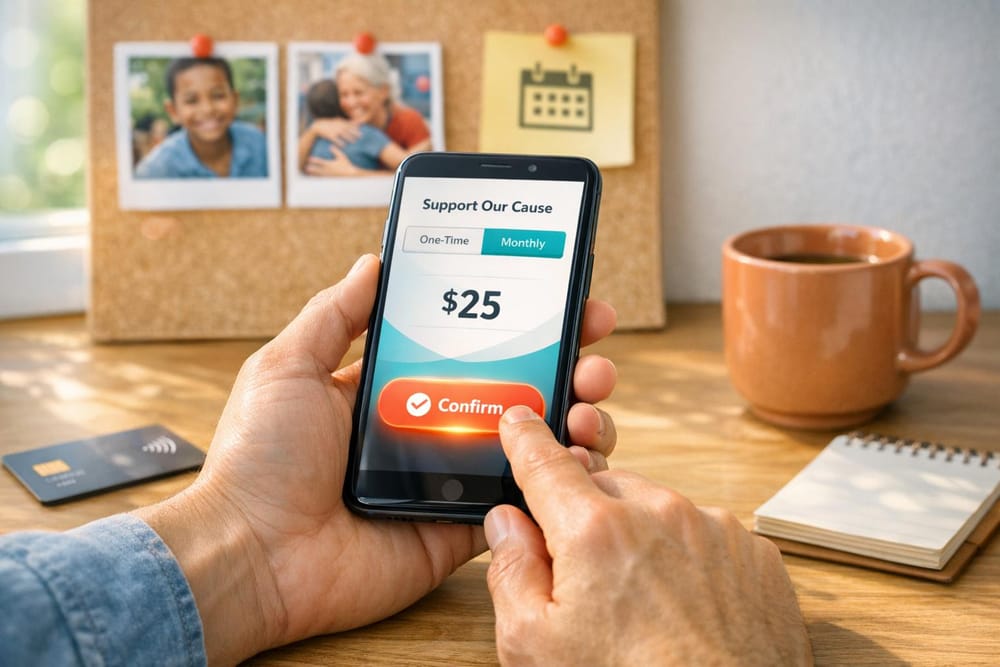
Turning One-Time Donors into Monthly Supporters
Gratona
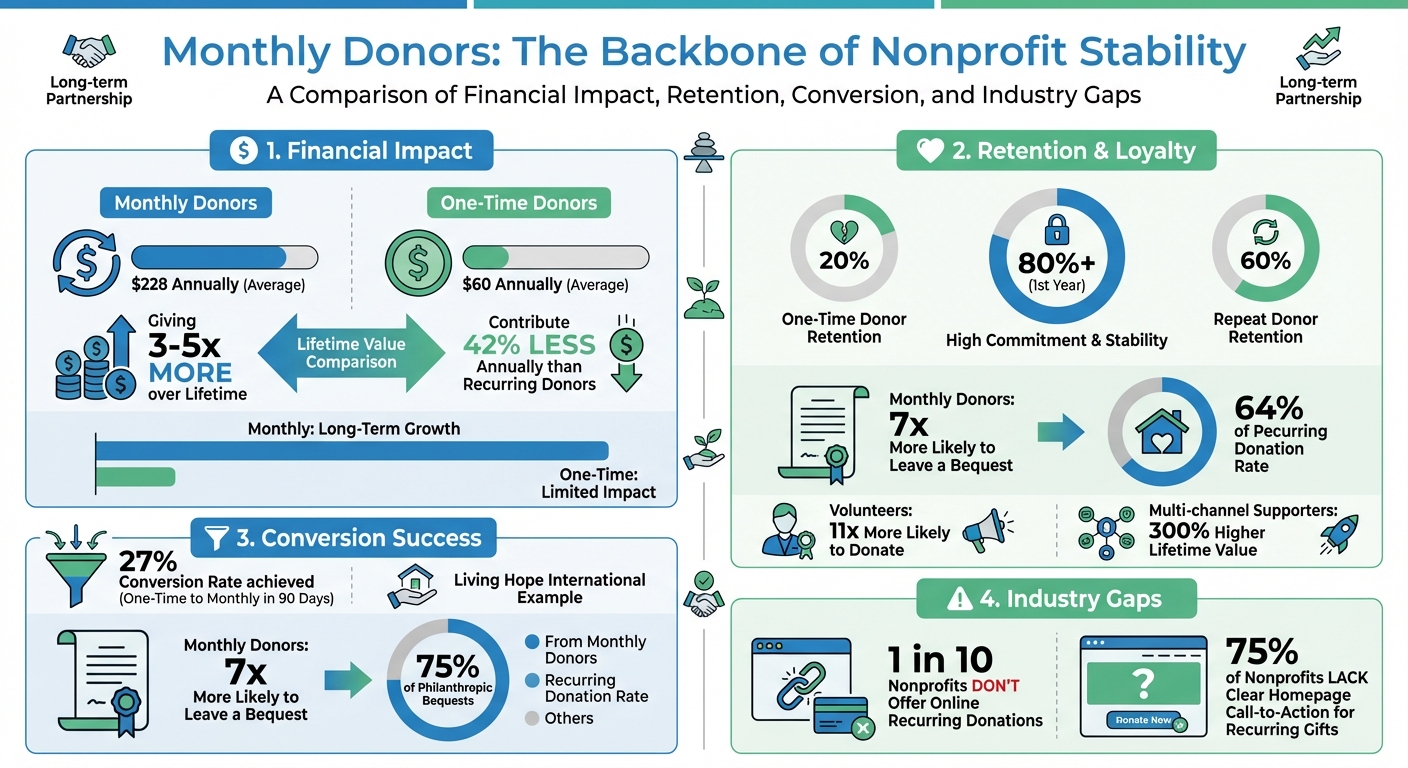
Monthly donors are the backbone of nonprofit stability. They provide consistent funding, reduce fundraising costs, and contribute 3-5 times more over their lifetime compared to one-time donors. With retention rates exceeding 80% in the first year, monthly giving ensures reliable revenue for programs like child sponsorships, where uninterrupted support is critical.
Here’s how nonprofits can convert one-time donors into monthly supporters:
- Build Emotional Connections: Personalize donor experiences with stories, updates, and tangible impact examples.
- Simplify Monthly Giving: Use frictionless digital payment experiences, clear donation tiers, and flexible payment options.
- Engage Regularly: Share updates, express gratitude, and maintain trust through transparency.
- Address Barriers: Offer self-service options, avoid long-term commitment fears, and proactively resolve payment issues.
- Use Data: Target likely monthly donors with tools like RFMT analysis and behavior tracking.
Organizations like Save the Children have seen success by combining personalized outreach with automation, converting 27% of one-time donors to recurring contributors within 90 days. By focusing on emotional engagement, user-friendly processes, and regular communication, nonprofits can secure long-term support and strengthen their mission.
Monthly Donors vs One-Time Donors: Key Statistics and Impact Comparison
How to Convert Year-End Donors into Loyal Monthly Supporters
What Motivates Donors to Give and Keep Giving
Understanding why donors give - and what keeps them giving - can help turn one-time contributions into ongoing support through lasting donor relationships. At its core, giving is driven by empathy and connection. When donors see themselves in the story of a child or feel a personal connection to their struggles, they’re far more likely to continue supporting the cause. This emotional connection is reinforced by what researchers call the "Giver's Glow": the neurological reward that comes from giving, which motivates people to give again.
Another key factor is trust. As Turnkey experts explain, “Your brand isn’t what people know about your organization; it’s what they feel about your organization”. Donors are moved by how your mission resonates with them emotionally, not just by the facts. Providing transparent reports and showing the tangible impact of donations builds this trust. On the flip side, donors often stop giving because they don’t feel acknowledged or don’t understand how their funds are being used.
The impact of trust and connection is clear in the numbers. Monthly donors, on average, contribute $228 annually - far more than the $60 average for one-time donors. Even more striking, 75% of philanthropic bequests come from monthly donors, who are seven times more likely to leave a bequest than annual donors. These figures highlight how recurring giving turns supporters into long-term partners in your mission.
How Child Sponsorship Creates Emotional Bonds
Child sponsorship programs take donor connection to the next level by personalizing the giving experience. Instead of supporting a general cause, donors are linked to an individual child with a name, a face, and a story. This personal touch has a far greater emotional impact than abstract statistics. As fundraising experts Katrina VanHuss and Otis Fulton from Turnkey put it, “The surgeon just held the scalpel; your donor removed the cataract”. This perspective positions the donor as the hero, directly changing a child’s life.
Living Hope International offers a great example of this approach. By emphasizing one-on-one interactions between sponsors and children and regularly sharing success stories through email, they’ve achieved a 64% recurring donation rate among their supporters. Social proof also plays a powerful role in reinforcing these emotional bonds. When donors see testimonials from other sponsors or learn about collective achievements, they feel part of a larger movement, which inspires them to stay engaged for the long term.
Overcoming Obstacles to Monthly Giving
Despite the benefits, some donors hesitate to commit to monthly giving. Financial concerns are often a major barrier, with donors worrying about long-term obligations. One way to address this is by breaking down larger gifts into smaller, more manageable monthly amounts. For instance, Draft Gratitude uses a specific monthly ask of $13.32 - the cost of feeding one horse for a single day. This approach makes the impact of a small gift tangible and helps their “Monthly Giving Team” cover nearly half of the organization’s monthly expenses.
Emotional reservations can also get in the way. Some donors fear feeling trapped in a long-term commitment or worry about the difficulty of canceling their contributions. Offering a self-service donor portal can alleviate these concerns, allowing supporters to pause, skip, or adjust their donations without needing to contact staff. This kind of flexibility builds trust and reduces anxiety . It’s also wise to avoid pre-selecting the recurring donation checkbox on forms, as this can frustrate donors and damage trust.
Lastly, technical issues like expired credit cards or failed payments can lead to “passive” donor churn. To combat this, nonprofits should proactively monitor upcoming credit card expirations and reach out to donors before payments fail. This small but thoughtful step shows donors that their support is valued and helps prevent unintentional lapses. By addressing these challenges and making monthly giving simple, transparent, and flexible, organizations can significantly boost their recurring donor base.
Using HelpYouSponsor to Find and Target Potential Monthly Donors
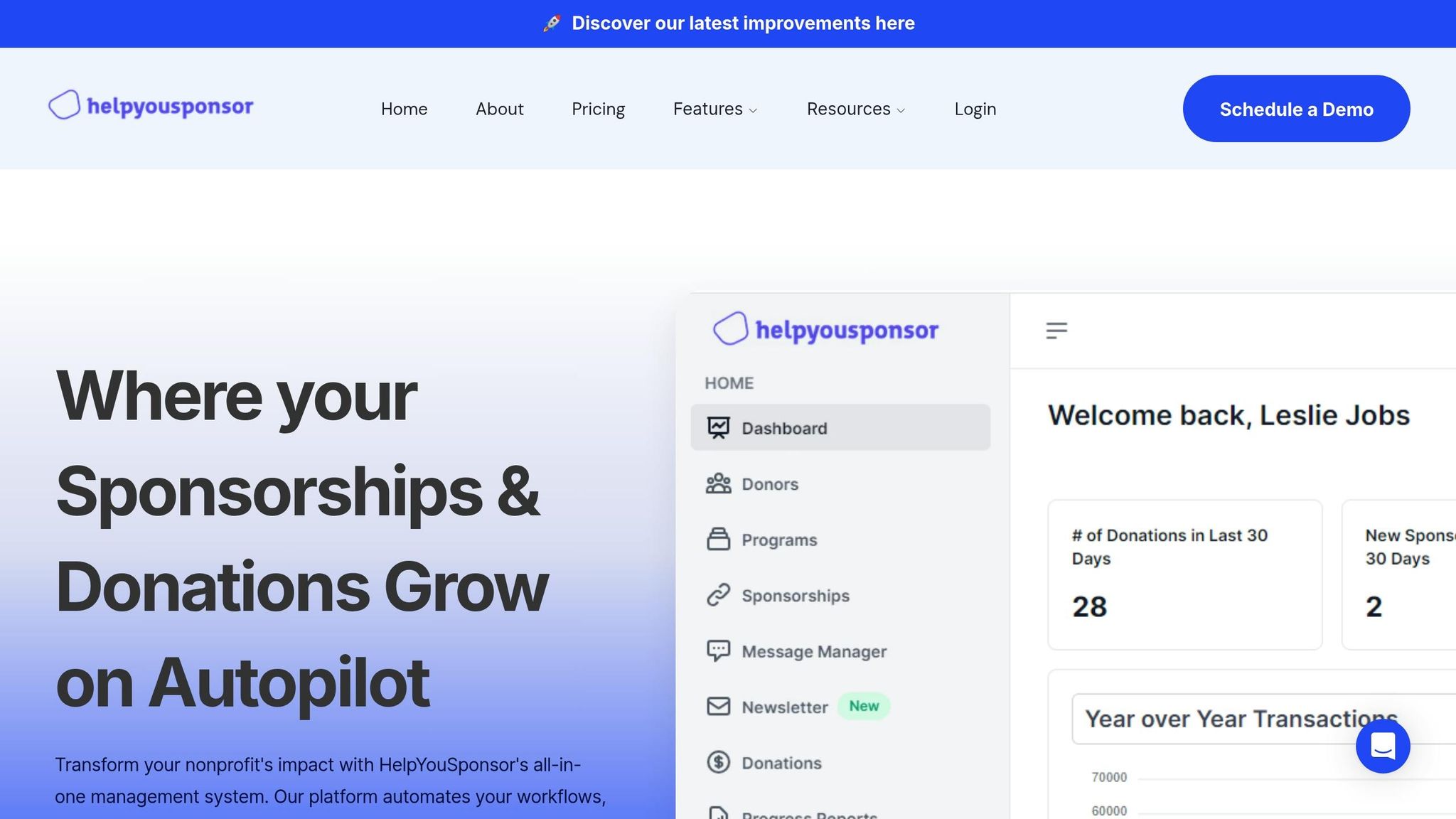
Finding potential monthly donors begins with understanding your existing supporters. HelpYouSponsor's donor management tools make it easier to sift through your data and pinpoint one-time donors who are most likely to commit to monthly contributions.
A great starting point is RFMT analysis - that’s recency, frequency, monetary value, and timing. This method helps identify patterns in donor behavior. For instance, donors who’ve given multiple times in the last six months are far more likely to transition into monthly donors. The stats back this up: repeat donors have a retention rate close to 60%, compared to just 20% for first-time donors. Volunteer involvement is another big clue. Volunteers are 11 times more likely to donate, and supporters who engage across multiple channels - like email, text, and website visits - can have a lifetime value that’s 300% higher than single-channel donors. By analyzing these behaviors, you can zero in on the supporters most likely to make the leap to monthly giving.
Segmenting Donors Based on Giving Patterns
To effectively target potential monthly donors, you need to go deeper than demographics. HelpYouSponsor offers tools to group supporters based on their actions. For example, donors who’ve contributed two or more times in the past year - especially those with steady giving habits - are prime prospects for monthly giving.
You can also track engagement levels. Look at who’s opening your emails, visiting your sponsorship pages, or showing up at your events. Another tip? Segment donors by recent activity and ensure their data is up to date. Automated reminders can help update outdated payment details, making the process smoother for everyone.
Customizing Appeals for Different Donor Groups
Once you’ve segmented your donors, it’s time to customize your outreach. Generic asks simply don’t work when you’re aiming for long-term commitments. HelpYouSponsor’s tools, like shortcodes and merge fields, let you personalize messages with details such as the donor’s name, past contributions, and the impact they’ve already made. This kind of personalization isn’t just a nice touch - it’s effective. Personalized subject lines can increase open rates by 26%, and tailored call-to-action buttons can boost results by 202%.
Understanding what motivates each donor is key. As Kiki Koutmeridou, Chief Behavioral Scientist at DonorVoice, explains:
"As a fundraiser, your goal is to find the supporter identity that matters most in driving giving to your organization."
This means tailoring your message to match each donor’s interests. For example, if someone regularly supports education projects, focus on how monthly giving ensures consistent funding for children’s schooling. Meanwhile, for donors passionate about emergency medical campaigns, emphasize how monthly gifts provide reliable resources for urgent surgeries.
HelpYouSponsor also lets you set up behavioral triggers to make your appeals timely. For instance, you could send an automated follow-up 24 hours after a donor makes their second one-time gift or visits your "ways to give" page. These well-timed asks feel natural and increase the chances of converting one-time donors into monthly supporters.
Making Monthly Giving Easy for Donors
Making monthly giving simple can significantly increase donor conversions. This strategy builds on earlier efforts like targeted donor engagement, forming a complete donor journey from initial engagement to ongoing support. Surprisingly, research reveals that 1 in 10 nonprofits still don't offer an online recurring donation option, and 75% fail to include a clear call-to-action for recurring donations on their homepage. That's a huge gap, especially considering that recurring donors contribute 42% more annually compared to one-time donors.
Designing Donation Forms That Encourage Recurring Gifts
A well-designed donation form can encourage more recurring gifts. One effective tactic is to set the recurring donation option as the default. This simple tweak signals its importance and reduces the effort required from donors. Adding visual elements like heart icons or bold colors can also draw attention to the monthly giving option.
Providing suggested donation tiers can guide donors toward impactful contributions. For instance, you could offer monthly giving levels like $10, $25, $35, $50, or $100, each tied to a specific outcome. A great example comes from the Minnesota Transportation Museum, which in 2025 added impact statements to its donation forms. They showed donors exactly how their monthly gifts would be used - $20/month for craft supplies or $100/month to cover school field trip costs. This approach helped donors see the tangible difference their contributions could make.
Another strategy to consider is the "Make it Monthly" upsell modal. When someone opts for a one-time donation, a pop-up can encourage them to switch to a monthly gift. This method has proven effective at converting one-time donors into recurring supporters.
Donors also appreciate flexibility in payment options. Alongside credit cards, offering ACH/E-check and PayPal ensures you accommodate different preferences. Including a "cover the fees" checkbox (typically around 4%) is another smart move, as it allows donors to ensure their full contribution goes toward your mission.
Finally, a seamless donation experience must be backed by secure and efficient payment processing.
Setting Up Payment Processing for Recurring Donations
Once your donation forms are optimized, secure and reliable payment processing becomes a critical next step. Using a PCI-compliant platform and displaying security seals can reassure donors and reduce drop-offs.
HelpYouSponsor offers tools to simplify recurring donation setups, including pre-configured templates for programs like Child Sponsorship and General Campaigns. The platform provides three program types to suit different needs:
- Contribution: Monthly donations work toward a specific financial goal.
- Number of Sponsors: Limits the number of recurring donors per recipient.
- Campaign: Supports both one-time and recurring donations for broader causes.
To enhance donor trust and engagement, HelpYouSponsor's "Auto Email Set" feature sends immediate receipts and updates. Another standout feature is the "Combine same-day charges" option. This groups multiple commitments - when tied to the same payment method and charge date - into a single transaction and receipt. This not only reduces processing fees but also keeps donor inboxes clutter-free. Additionally, the platform’s "Order page options" allow you to customize payment methods and include personalized messages or instructions directly on the donation page.
Together, these tools and strategies create a smoother, more appealing process for donors, encouraging long-term support.
Keeping Monthly Donors Engaged Through Regular Communication
Once donors commit to monthly giving, keeping them engaged is key to maintaining their support. Regular and meaningful communication helps them see how their contributions drive your mission forward. Without these touchpoints, even the most loyal donors might feel distant from your work. The aim is to ensure every donor feels like an integral part of your team.
Sharing Impact Updates That Show Results
Monthly donors want to know their contributions are making a difference. For those managing child sponsorship programs, sending quarterly or bi-annual updates about a child's education, health, and achievements can highlight the progress being made. Adding multimedia elements - such as photos, videos, or even drawings from the child - makes these updates more personal and engaging. Taking it a step further with direct interactions, like letter exchanges or video messages, transforms the act of donating into a meaningful relationship. These updates not only build trust but also naturally lead to personalized donor communication, keeping donors invested in your mission’s success.
Rewarding Monthly Donors with Special Recognition
Acknowledging donors in a genuine way fosters loyalty. By segmenting donors based on their giving history and interests, you can craft thank-you messages that feel personal and heartfelt. This could include private notes or public acknowledgments tailored to each donor. Inviting them to exclusive events - like webinars or virtual meet-and-greets - or sending small tokens of appreciation, such as handwritten notes or mentions in annual reports, reinforces their importance to your work. Tools like HelpYouSponsor’s automated messaging features and self-service portal also make it easier for donors to manage their preferences and stay connected to your mission.
Measuring and Improving Your Monthly Giving Program
Tracking the right metrics is crucial for understanding how your monthly giving program is performing. With HelpYouSponsor's real-time reporting, you gain access to clear data that empowers you to make informed decisions. These insights allow you to evaluate your program effectively and spot areas for improvement.
Metrics to Track for Program Growth
One key metric to monitor is donor retention - the percentage of monthly donors who continue their support year after year. Monthly donors tend to stay on board at twice the rate of one-time givers, making this a critical indicator of program stability. On the flip side, keeping an eye on your churn rate - the percentage of donors canceling their contributions - can help you identify when and why supporters disengage, giving you a chance to address issues early.
Another essential metric is Monthly Recurring Revenue (MRR), which reflects the predictable income your program generates each month. This is vital for financial planning and budgeting. For sponsorship-focused programs, tracking your fulfillment rate is equally important. This measures the percentage of pledged funds that are successfully collected. A low fulfillment rate might not mean donors are unwilling to give - it could point to issues like failed payments. Tools like HelpYouSponsor's dashboard can help you monitor failed transactions and send automated reminders for expiring credit cards, reducing involuntary churn.
Your average monthly gift size is another useful metric. By dividing your total monthly revenue by the number of active donors, you can assess whether your suggested donation amounts align with what donors are willing to give. Additionally, tracking donor lifetime value (LTV) provides insight into the total financial contribution you can expect from each supporter over the course of their relationship with your organization. HelpYouSponsor's "At a Glance" dashboard can help you spot any downward trends in these areas before they escalate.
Finding Opportunities to Increase Monthly Contributions
Once you've assessed your program's health, the next step is finding ways to grow. Start by identifying "consistent supporters" - those who have given monthly for at least 12 consecutive months. These loyal donors are excellent candidates for upgrade campaigns, where you ask for a slight increase in their monthly contributions. Donors who give twice within their first three months of joining are also great prospects for incremental upgrades.
You can also introduce donation tiers on your recurring gift forms. These tiers help donors understand the tangible impact of their contributions at different levels. Another strategy is pledge-based framing, where you present monthly donations as part of a larger annual goal. For instance, framing a $20 monthly gift as a $240 annual impact can feel more meaningful. This approach aligns with how many Americans already think about payments - 56% use "Buy Now, Pay Later" services, showing comfort with breaking down larger commitments into smaller, manageable amounts.
Finally, analyze data on when donors typically stop giving. Use this information to launch re-engagement campaigns just before that drop-off point. Personal outreach can be particularly effective here. For example, a personal follow-up about three months after a donor’s initial gift can significantly improve conversion rates compared to automated messages.
Conclusion: Building Long-Term Funding with Monthly Supporters
Turning one-time donors into monthly supporters isn’t just about boosting revenue - it’s about creating a steady foundation for meaningful, long-term work. Recurring donors provide a reliable income stream, allowing you to plan ahead and focus on the children and communities you serve, instead of constantly chasing the next donation. Plus, monthly donors often have retention rates above 80% after their first year and contribute far more over time compared to one-time givers.
The strategies in this guide - from fostering emotional connections through child sponsorship to simplifying donation forms and staying engaged with regular updates - are designed to reshape your fundraising efforts. By combining these elements, you can create a sustainable approach to funding. HelpYouSponsor simplifies this process by offering a single platform that handles donor segmentation, personalized communication, real-time analytics, and smooth payment processing. These tools tie together earlier methods of donor engagement and segmentation, making it easier to build a strong monthly giving program. This lets you focus on what truly matters: supporting the children and families in your care.
To grow your base of monthly supporters, which requires effective donor acquisition strategies, start by identifying donors who already give frequently or consistently. Use behavior-based triggers to send timely, impactful appeals that highlight how a monthly commitment makes a real difference. Make the sign-up process effortless with mobile-friendly forms and flexible payment options. Keep supporters engaged by sharing updates that show exactly how their contributions are changing lives - especially through child-specific stories.
A well-implemented monthly giving program strengthens donor relationships and ensures more stable funding. By combining personalized communication with automation, you can turn donors into long-term partners, securing ongoing support for the children and communities that need it most.
FAQs
When should I ask a one-time donor to go monthly?
The best moment to invite a one-time donor to become a monthly supporter is soon after their initial donation - ideally within 24 to 48 hours. This is when donors are most engaged and open to further involvement. Use this window to send personalized follow-ups that express heartfelt thanks and emphasize how ongoing contributions can make an even greater difference. A thoughtful approach here can significantly boost the chances of turning one-time donors into consistent supporters.
What monthly amounts should I suggest on the donation form?
When setting up monthly donation options, it's common to suggest amounts between $10 and $50 or even higher. This range works well because it aligns with varying donor capacities and your organization’s goals. By providing multiple options within this range, you make it easier for donors to contribute regularly, regardless of their budget.
How do I prevent monthly donors from lapsing due to failed payments?
Prevent missed payments by keeping a close eye on payment statuses and quickly resolving any failed transactions. Leverage donor management tools to automate reminders and retry attempts for unsuccessful payments. Build stronger donor relationships by showing gratitude and clearly explaining how their contributions make a difference. A mix of timely follow-ups, personalized communication, and dependable payment systems can go a long way in reducing lapses due to failed payments.