

Building a Reliable Revenue Stream with Monthly Giving Programs
Gratona
Monthly giving programs are a straightforward way for nonprofits to secure consistent income. Donors set up automatic contributions, which means nonprofits can rely on steady funding instead of unpredictable one-time gifts. Here’s why these programs matter:
- Consistent Revenue: Monthly donations stabilize cash flow, helping nonprofits plan better.
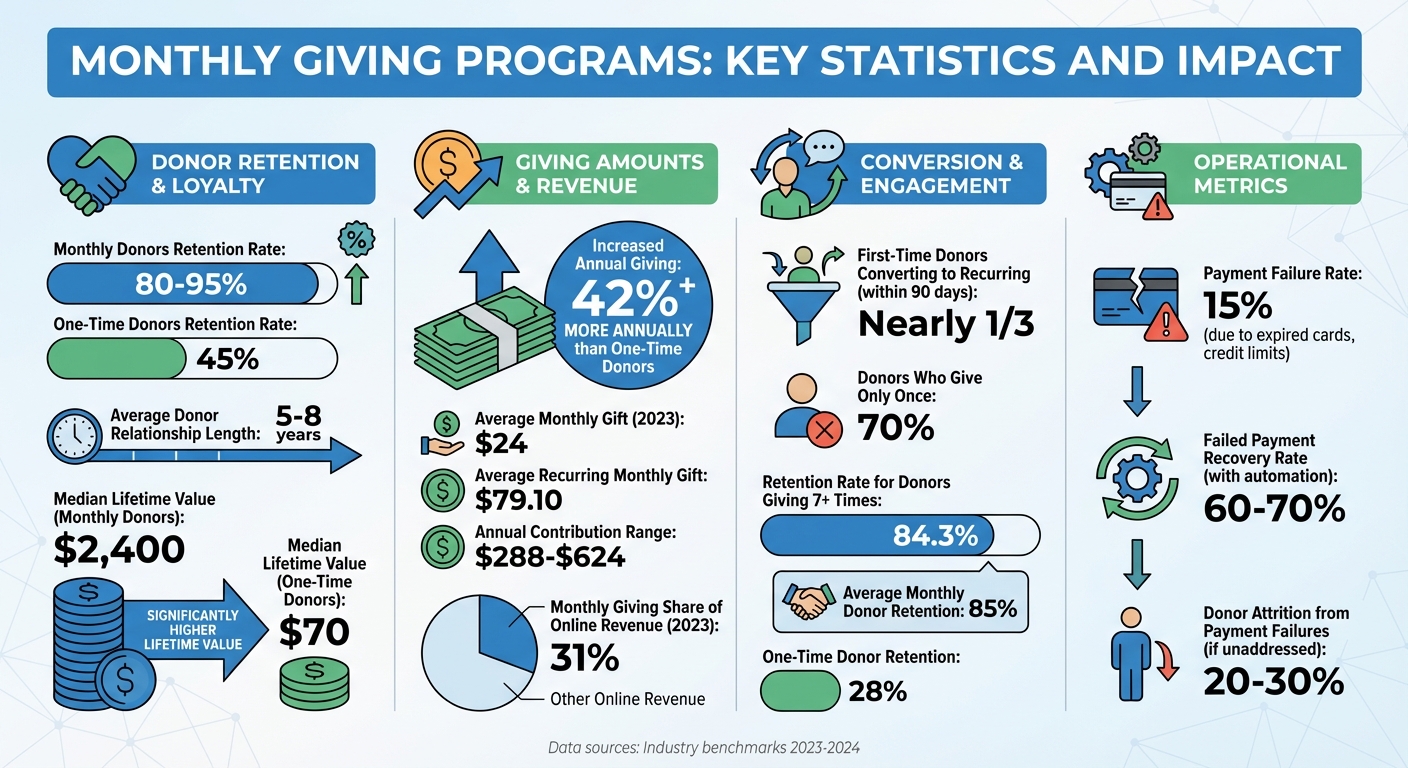
- Higher Retention Rates: Recurring donors stick around 80–95% of the time, compared to 45% for one-time donors.
- Increased Giving: Monthly donors contribute 42% more annually than one-time donors.
- Long-Term Impact: On average, monthly donors support nonprofits for 5–8 years.
Key Stats:
- Monthly giving made up 31% of online nonprofit revenue in 2023.
- Recurring donors typically give between $288 and $624 annually.
- Retaining recurring donors costs less than acquiring new ones.
By focusing on donor stewardship and retention, offering easy sign-up options, and showing the impact of contributions, nonprofits can create reliable revenue streams while deepening donor trust.
Monthly Giving Programs: Key Statistics and Impact for Nonprofits
Nonprofit Sustainer Programs: How to Develop a Successful Monthly Giving Program - Stephen King
sbb-itb-3ec96a5
Planning Your Monthly Giving Program
A strong monthly giving program starts with clear objectives, identifying the right donors, and crafting a compelling reason for ongoing support.
Set SMART Goals for Monthly Giving
When setting goals, make them Specific, Measurable, Achievable, Relevant, and Time-bound. For example, instead of saying, "We want more donors", aim for something concrete like: "Recruit 100 monthly donors contributing $30 each by December 31, 2026". Break your goals into manageable targets, such as the number of new donors, average gift size, and total monthly recurring revenue (MRR).
Monitor key metrics like donor lifetime value, recurring revenue, and churn rates. Use your current data to set realistic expectations, but also include stretch goals to encourage growth. Many nonprofits strive for recurring donations to make up 25% to 40% of their annual revenue.
When framing financial goals, connect them to the impact they create. For instance, instead of saying, "We need $10,000 more per month", try something like, "Increasing monthly gifts will allow us to serve 40% more families". This makes your goals feel mission-focused rather than just about money.
The Tim Tebow Foundation offers a great example of success. Between 2023 and 2024, they grew their recurring donor base from 6,700 to nearly 20,000 by implementing a five-point communication strategy and using payment re-processing tools. They achieved a 90% year-over-year retention rate. Kyle Roosen, their Senior Marketing & Communications Director, explained their philosophy:
"I often say, when a recurring donor sees the monthly TTF charge, I want their immediate feeling to be joy, gratitude, and confidence. We believe the number one thing we can do to impact donor churn is to obsess over the donor's impact".
Identify and Target the Right Donors
Your donor database is a goldmine for spotting potential monthly supporters. Focus on individuals with repeated giving patterns, especially those who have donated two to three times in the past year. These are your most engaged donors and the most likely to commit to recurring gifts.
Pay attention to long-time supporters, annual givers, and donors who contribute smaller amounts. For people on fixed incomes, spreading their donations over time can be more manageable. Interestingly, nearly one-third of first-time donors who switch to recurring giving do so within the first 90 days of their initial donation. This means outreach to new donors during this period is crucial.
Segment your donor list based on giving patterns and preferences. While 70% of donors only give once, those who donate seven or more times boast a retention rate of 84.3%. These loyal donors are the ideal candidates for your monthly giving program.
Build a Clear Case for Support
To inspire recurring donations, donors need to see the tangible impact of their commitment. Connect specific donation amounts to real outcomes. For instance, "$25 a month provides school supplies for five students", or "$40 a month gives 12 people access to clean water for a year." This approach makes the impact feel personal and immediate.
Stories are another powerful tool. Share real-life examples of how donations make a difference. Action Against Hunger's "THRIVE" program, for example, uses the story of Mohamed, a boy who recovered from malnutrition, to create an emotional connection. This kind of storytelling helps donors feel like they're part of the solution, not just a funding source.
Consider giving your program a name that emphasizes community and belonging. For example, charity: water calls their monthly donor group "The Spring", while Doctors Without Borders uses "Field Partners" to highlight the essential role of their supporters. Henah Parikh, formerly with She's the First, explained their program name choice:
"Our work chiefly supports girls' education and rights, and so we wanted to play with that 'classroom' theme a bit. Commonly, students who sit in the front row are usually the most engaged, and that paralleled nicely with our monthly donor community".
Lastly, emphasize the ease and reliability of recurring donations. Highlight the "set it and forget it" convenience while explaining how this steady income supports long-term planning, stability, and daily operations. Being transparent about where the money goes builds trust and helps donors see the full impact of their contributions.
Once your program is planned, focus on creating a donor experience that keeps supporters engaged and inspired.
Designing a Donor-Focused Program
Creating an engaging and straightforward donor experience can turn potential supporters into loyal monthly contributors. When the process is easy and meaningful, donors are more likely to sign up and stay involved, providing the consistent funding your organization relies on.
Set Suggested Monthly Giving Levels
When donors encounter a donation form, offering clear and specific giving options can make a big difference. For example, presenting three suggested levels - like $20, $50, and $150 - helps reduce decision fatigue while catering to a range of budgets. Studies show that donors often choose the middle option, so setting it as the default can encourage participation.
You can also make monthly giving feel more approachable by framing it in relatable terms. For instance, describing a donation as “less than the cost of a streaming subscription” helps supporters see how easily it fits into their budget. In 2023, the average monthly gift was $24, while recurring donors contributed an average of $79.10 per month. Starting with modest amounts makes the program accessible, while higher tiers provide a pathway for more generous contributions.
Once donation levels are established, focus on making the sign-up process as seamless as possible.
Simplify Online Donation Processes
A smooth donation process is key to converting visitors into committed monthly donors. Complicated forms or unnecessary steps can cause potential supporters to drop off. Aim for a simple form that collects only essential details - like name, email, and payment information - and can be completed in under a minute or three clicks.
To encourage recurring donations, set monthly giving as the default option on your donation page. A toggle feature can let donors easily switch a one-time gift to a monthly commitment. Since 60% of recurring donations are made on mobile devices, ensure your forms load quickly and function well on smaller screens.
Offering multiple payment options - such as ACH transfers, PayPal, and digital wallets - gives donors flexibility. Additionally, a self-service donor portal can allow supporters to update payment details, adjust gift amounts, or pause donations without assistance. This convenience is vital, as around 15% of recurring payments fail due to issues like expired or lost cards or credit limits. Automated recovery systems with retry logic can recover 60–70% of these failed payments.
To handle recurring donations efficiently, consider using HelpYouSponsor for program management.
Use HelpYouSponsor for Program Management
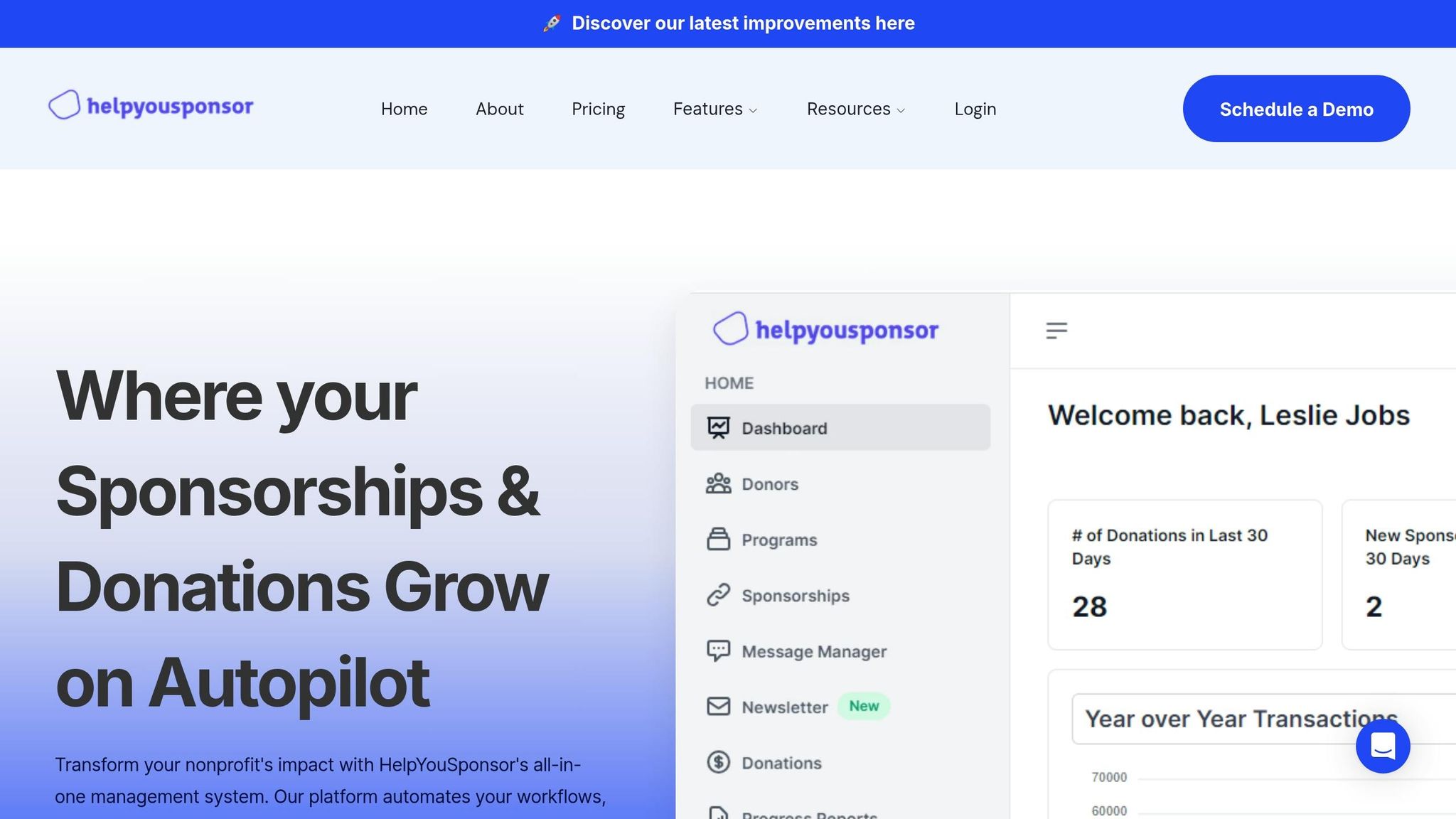
Managing a growing base of monthly donors manually can quickly become unmanageable. HelpYouSponsor simplifies this by automating key tasks like issuing donation receipts, confirmations, and year-end contribution summaries. This automation allows your team to focus on building relationships with donors.
The platform also provides a self-service portal where donors can pause, modify, or cancel their gifts and update payment details independently. When payments fail, automated retry systems and notifications about issues like expired cards help recover lost revenue.
HelpYouSponsor consolidates recurring and one-time donations into a single system, giving you a complete view of each donor’s history. This centralized data makes it easier to segment donors by giving level, tenure, or interests. With these insights, you can share personalized impact stories that keep donors engaged. By using this tool, you’ll have the resources to grow your program while maintaining the steady funding that powers your mission.
Promoting and Growing Your Monthly Giving Program
Once your monthly giving program is ready to roll out, the next step is getting it in front of the right audience. A well-thought-out promotion strategy can turn casual supporters into loyal monthly donors.
Create a Dedicated Campaign Page
A standalone landing page acts as a central hub for your program, making it easy for potential donors to understand its purpose. Adding features like a fundraising thermometer can visually represent progress, creating a sense of urgency and excitement. Including a list of current members also builds social proof and fosters a feeling of community.
Give your program a name that aligns with your mission and conveys exclusivity. Many organizations choose names that evoke emotion and a sense of belonging. For example, charity: water calls their program "The Spring", Doctors Without Borders uses "Field Partners", and The Red Cross refers to their members as "Champions".
On the campaign page, connect specific donation amounts to tangible outcomes. For instance, Feeding Tampa Bay shows donors that "$10/month feeds a local child for one month", while $25 a month is framed as just 82 cents a day. This approach makes contributions feel personal and manageable.
Use Multi-Channel Marketing
Once your campaign page is set up, the next step is reaching potential donors through various channels. Promote your program everywhere: feature it prominently on your homepage, add it to email signatures, and use QR codes at events to link directly to the donation page.
Email outreach remains one of the most effective tools. Personal emails or phone calls can encourage long-time or frequent one-time donors to transition into monthly giving. The best time to make this ask is about three months after their initial donation.
Leverage major fundraising campaigns, such as GivingTuesday, to highlight your monthly giving program alongside one-time donation appeals. Social media is another powerful tool - use it to share testimonials from current monthly donors and show the real-world impact of their contributions. These strategies can strengthen donor relationships and help create a steady stream of monthly revenue. Implementing donor management strategies further ensures these supporters remain engaged for years to come.
To further enhance your outreach, consider offering incentives.
Offer Incentives for Donor Participation
Creative perks can draw in new donors while reinforcing their connection to your mission. Branded merchandise like stickers, magnets, tote bags, or calendars serves as a physical reminder of their commitment.
For example, The Nature Conservancy's "Conservation Champions" program offers supporters an award-winning magazine, exclusive updates, and an annual calendar. Similarly, To Write Love on Her Arms rewards members of their "TWLOHA Blue" program with birthday perks and exclusive online store discounts. Offering behind-the-scenes content, early access to event tickets, or special reports can also make donors feel like valued insiders.
Matching campaigns can be another powerful motivator. Denver Rescue Mission, for instance, launched a "Double Your First Three Months of Giving" campaign backed by $36,000 in matching funds. This effort brought in $12,465 from 125 donors in just one month and added 81 new monthly supporters. The projected long-term value of this campaign exceeded $580,000.
Finally, reassure donors that they can adjust or cancel their contributions at any time. This flexibility builds trust and makes the commitment feel less daunting.
Measuring and Scaling Success
Once your monthly giving program is up and running, tracking the right metrics becomes essential. These numbers reveal patterns in donor loyalty, revenue trends, and opportunities for long-term growth.
Track Key Performance Indicators (KPIs)
Start with the donor retention rate - this is the cornerstone metric. Monthly donors typically stick around at an average rate of 85%, compared to just 28% for one-time donors. This loyalty directly impacts revenue stability. Another critical metric is donor lifetime value (LTV), which represents the total contributions a donor makes over their relationship with your organization. For monthly donors, the median LTV is $2,400 - an impressive 34 times higher than the $70 median LTV for one-time donors.
Keep an eye on monthly gift revenue and its annualized value to guide your budgeting. The average monthly gift size can tell you whether your suggested donation levels are resonating with donors. Pay attention to conversion rates, which show how many one-time donors transition into recurring supporters. Also, track attrition rates - the percentage of donors who cancel their subscriptions. Payment failures alone can cause 20-30% of monthly donors to drop off if not addressed promptly. Another useful metric is gift upgrades, which measures how many donors increase their monthly contributions. Aiming for 5-10% of donors to upgrade annually is a realistic goal.
Advanced analytics tools can make monitoring these metrics much easier.
Use HelpYouSponsor for Advanced Analytics
HelpYouSponsor simplifies the process of tracking metrics. Its automated reporting features handle monthly giving amounts, donor counts, and retention rates without requiring manual input. The platform also identifies potential upgrade candidates - typically donors who’ve made 2-3 contributions or maintained consistent giving for 6-24 months. Additionally, it supports predictive budgeting by generating annualized revenue reports, giving you a clearer picture of future income. When payment failures occur, the system sends automated notifications with one-click update links to recover missed transactions.
Refine Strategies for Long-Term Growth
With these insights, you can fine-tune your strategy for sustained growth. Regularly compare your performance data against goals and industry benchmarks. For example, if your retention rate drops below 70%, it’s a sign that donor stewardship needs immediate attention. Segment your donors by their tenure - new sustainers (0-6 months), established supporters (6-24 months), and long-term champions (24+ months) - to deliver personalized impact updates that encourage loyalty. Evaluate your donation page performance, as each additional step in the process can reduce conversions by 10-15%. Use these findings to refine your appeals, optimize your marketing channels, and adjust suggested donation levels to keep your program growing strong.
Conclusion: Building Stability with Monthly Giving Programs
Monthly giving programs offer nonprofits a steady stream of revenue and a base of dedicated supporters. On average, recurring donors stick around for eight years and contribute 42% more annually compared to one-time donors. By setting clear goals, making the donation process simple, and regularly sharing updates on the impact of their contributions, you can create a stable foundation that supports your mission even during challenging economic times.
This isn’t just about raising funds - it’s about building lasting relationships. Take the Rainforest Action Network, for example. They achieved a 74% retention rate among their monthly donors by focusing on engagement and stewardship. Similarly, the Midwest Regional Food Bank saw a 6.5x increase in new monthly donors year-over-year by promoting their program through social media ads. These successes stem from practices like warm onboarding, transparent impact updates, and efficient management of donations. A donor-centered strategy like this thrives when paired with the right operational tools.
Platforms like HelpYouSponsor can simplify the process by automating payment handling and tracking essential metrics and using predictive analytics to boost donor retention. Features such as retention rate monitoring, lifetime value tracking, and automatic notifications for failed payments reduce administrative headaches and prevent losing donors due to expired cards or other errors.
Starting small can make a big difference. Even a modest number of monthly donors can build momentum over time. As Zanne Garland from the Rainforest Action Network points out, monthly giving is particularly effective at engaging smaller-scale supporters, many of whom eventually become major donors. With the right tools and a focus on donor relationships, your monthly giving program can evolve into a dependable revenue stream that fuels your mission and drives long-term growth.
FAQs
How many monthly donors do we need to hit our budget goals?
To achieve your budget goals, you'll need about 96 monthly donors each contributing $52. This would bring in roughly $5,000 in monthly revenue, aligning with the average online donation amount.
What’s the best first monthly gift amount to ask for?
A reasonable starting point for monthly donations usually falls between $10 and $25. This amount is manageable for most donors and provides your organization with a steady, dependable source of recurring income.
How can we prevent recurring donations from failing or lapsing?
To minimize failed or lapsed recurring donations, make the enrollment process straightforward and ensure monthly giving options are easy to spot. Provide flexibility by letting donors adjust or cancel their contributions whenever they need. Keep in touch regularly to share how their support is making a difference and create a sense of belonging. These actions build trust and encourage donors to stay involved over the long term.